

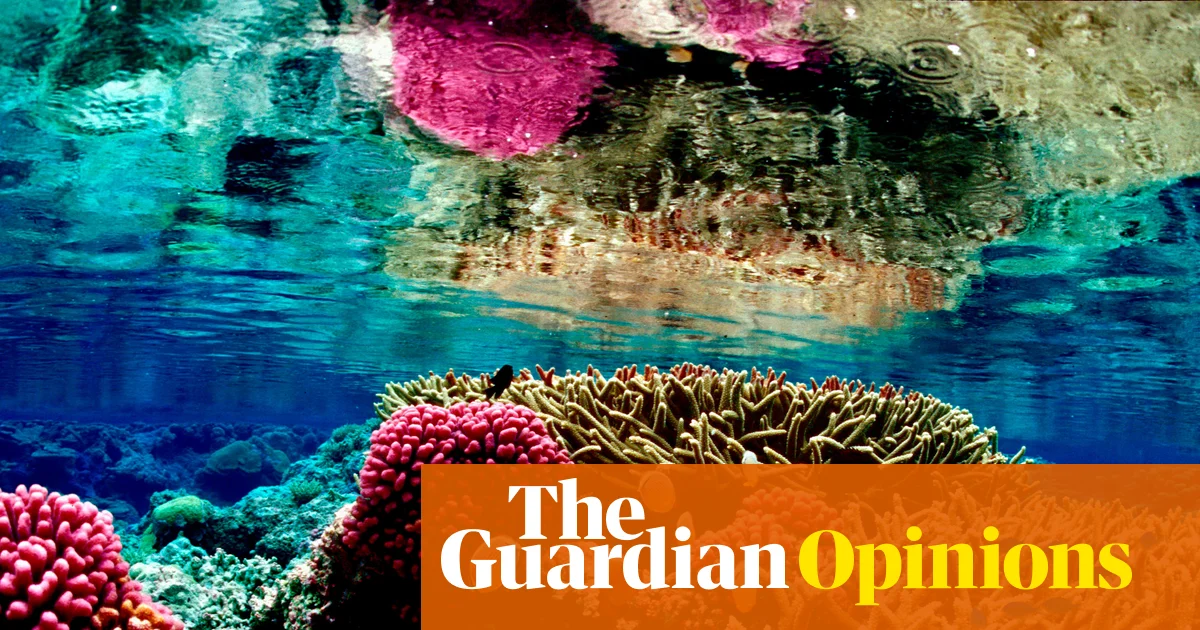
Where I come from – Hawai’i – the reef isn’t just something you look at. It’s part of us. It feeds our families, protects our shores, and lives at the center of our culture. In our stories, coral is one of our oldest ancestors. It’s a reminder that everything in the ocean, and all of us, are connected.
Right now, that integral connection is under threat.
Our coral reefs are under severe stress. The planet has just experienced the most widespread coral bleaching event ever recorded, lasting 33 months into 2025. Scientists warn that at 1.5C of global warming, up to 90% of coral reefs could be lost. Ninety per cent. And 1.5C is not lingering in the distance – it’s extremely close.
Even if the world somehow hits its climate targets, reefs are still getting pummeled by plastic pollution, coastal development, agricultural runoff and overfishing. They’re so fragile. And when reefs weaken, coastlines get hit harder by storms and rising seas. Homes and jobs become exposed. Cultures and sacred places are put at risk. And the incredible range of underwater life found only in reefs – once it’s gone, it’s gone for good.
But I refuse to let coral reefs be a lost cause.
In Hawai’i, we talk about kuleana – a responsibility passed down through generations. Different languages have different terms for it, but this sense of duty and care is not a new concept. It’s been central, especially to island nations and coastal societies, for centuries.
Now, for our environment and especially our reefs, this responsibility extends to every single person on Earth. We all need to remember that we’re part of nature, and taking care of it means taking care of ourselves.
What does this mean in practice? I’ve seen a few examples that stuck with me. In French Polynesia, I worked with communities that are deeply tied to coral reefs – and saw firsthand how readily they’ll step up and help restore them, once given the tools and support to do so.
Through my work with the UN Environment Programme and the Global Fund for Coral Reefs, I’ve also seen how smart investments can lead to major change. Even a little bit of finance can go a long way to help people find new ways to earn a living without destroying nature, boost conservation of marine ecosystems and support communities in rebuilding sustainably after they’re hit by extreme weather.
These give me hope. But the hard truth is that we still lack the luxury of time to sit back and rely on what’s already happening. Climate change and unsustainable development are moving fast, meaning we need to move faster.
That is why the next year matters.
The months ahead could be a defining moment for coral reefs. New science and a slew of major global gatherings – from Kenya and New Zealand to the Global Coral Reef Summit – are going to help coral reefs get the attention they deserve.
Then it’s up to all of us to do something with that attention. There is no time to place blame or point fingers. From countries to communities, businesses to individuals, it’s the responsibility of all of us to support the survival of these ecosystems.
Across the board, we know what works. Cut our climate footprints. Reduce our plastic pollution. Protect the species that are critical to reefs. Take care when underwater. Buy from reef-positive businesses. Support coastal communities. Invest. Legislate. Speak. Act.
Moments like this year can be turning points, not because of what is said or pledged or committed, but because of how we change. Coral reefs don’t have time for us to concoct perfect plans for their saving. They need us to show up now – to live the spirit of kuleana, take responsibility, and treat them like we treat ourselves and our children. Because they are a part of us, and hopefully always will be.
-
Jason Momoa is an actor, film-maker, and UNEP Advocate for Life Below Water, dedicated to protecting our oceans and advancing global awareness around coral reef conservation





Leave a Comment