

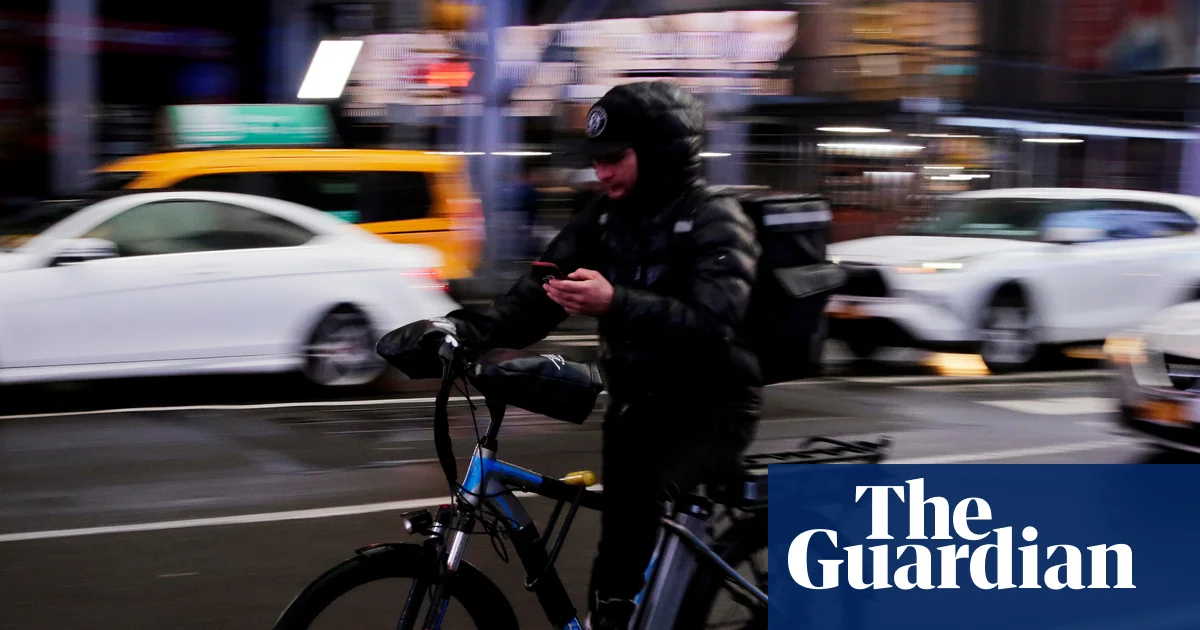
The increasing number of traumatic injuries from e-bikes in the United States has caught the attention of physicians, lawmakers, pedestrians and others.
While there is a shared concern about people recklessly riding the trendy machines, there are significant differences among roadway safety advocates about the best ways to prevent accidents – including whether the government should focus on improving infrastructure rather than regulating e-bikes.
“When we think about e-bike crashes and deaths related to e-bikes, the vast majority are cars and trucks killing people on e-bikes as opposed to people on e-bikes injuring somebody else,” said Alexa Sledge, director of communications for Transportation Alternatives, an organization dedicated to making New York’s streets safer.
“What we really want to see is an improved and expanded infrastructure to protect people that are biking, protect people that are walking and make sure that there are different protected areas for all types of transportation.”
Roberta Simon’s experience was not part of what Sledge calls the “vast majority”. Simon was walking in Central Park in August 2024 when a teen riding an e-bike crashed into her. She woke up four days later in a hospital with a traumatic brain injury, 40 staples in her head and a tube in her throat. It took Simon, an attorney, six months to return to her daily activities.
“I can’t stress enough how lucky I am,” she said.
Seventeen people in New York City were killed in e-bike crashes in 2024, according to the city’s department of transportation.
Across the US, e-bike injuries have steadily increased, with 1,600 recorded nationwide in 2018, according to a report in the medical journal Jama Surgery, and just four years later, in 2022, there were 23,000.
E-bike sales went from 50,000 in 2018 to 527,000 in 2022, according to the market research firm Circana, and the US e-bike market has been projected to grow from roughly $4.4bn in 2026 to more than $6.2bn by 2031.
“I see [an e-vehicle injury] every single day,” Dr Ashley Pfaff, a trauma and critical care surgeon at Bellevue hospital in New York, told City Journal last year.
In Tampa Bay, Florida, where at least 28 people were killed in e-bike crashes over the last five years, a local pediatric emergency room physician told the Tampa Bay Times that the traumatic injuries had caused a “paradigm shift in what we do in emergency medicine”.
California has also experienced a surge in e-bike accidents; two towns near San Diego declared a state of emergency following fatal crashes. New York City saw 901 e-bike injuries in 2025, a 41% increase from 2024, according to the transportation department. And at Bellevue in particular, where Pfaff works, a study found that 7% of all trauma visits there between 2018 and 2023 were due to micromobility – small, lightweight and low-speed modes of transportation such as bicycles, e-bikes and e-scooters – injuries. Nearly 69% of those patients needed to be admitted to the hospital and almost a third needed intensive care.
To prevent more of these injuries, the NYC E-Vehicle Safety Alliance is advocating for city and state legislation titled Priscilla’s Law, named for Priscilla Loke, a preschool educator who was walking in Manhattan in 2023 when she was struck and killed by someone riding an electric Citi Bike, which are available for New Yorkers to rent throughout the city.
Priscilla’s Law would require people to register their e-bikes and e-scooters with the state’s department of motor vehicles and attach license plates to them. Without plates, advocates say, the city won’t be able to enforce the 15mph speed limit for e-bikes instituted in 2025 by then mayor Eric Adams. California lawmakers are considering similar legislation.
“Police can’t chase down bikes,” said Janet Schroeder, co-founder of the NYC E-Vehicle Safety Alliance. But with plates, e-bikers breaking laws would be caught “by traffic cameras, just like cars”.
Transportation Alternatives opposes the legislation. The measure would force the city to create an “absolutely massive new agency” and make changes that are “not going to make anyone safer”, said Sledge.
New Yorker Michelle Cruz supports Priscilla’s Law because her father, Luis Cruz, was killed last year when he was struck by an e-biker while walking across the street in Brooklyn. The e-biker had been delivering food and ran a stop sign. The elder Cruz, a Mexican immigrant who became a US citizen, was also making a food delivery at the time for Uber, but he had been driving, his daughter said.
He was a “hard worker and a good dad”, she said, adding: “I do feel for the immigrants because they have to work somehow, and bikes are something that they can do without having their license.”
But they could ride non-motorized bikes, she suggested.
E-bikers “run stop signs” and “don’t follow any type of driving laws”, Michelle Cruz said. “It would be best that they do get a license and have their license plates and have to follow the same regulations as cars.”
Outside the US, in Toronto, the city government considered establishing a bicycle registration system but later determined that it was “not worth the creation of a major bureaucracy to oversee this practice”.
Back stateside, New Jersey recently passed a law that requires all e-bikers to have a license and to register and insure their devices. People for Bikes opposed this because it created “burdensome restrictions on low-speed e-bikes while leaving higher-risk vehicles like electric mopeds and motorcycles without additional regulations”, the organization stated.
E-bike registration would lead to “unnecessary police stops of cyclists and e-micromobility users and create unequal enforcement by police officers on riders”, Transportation Alternatives stated in a letter to the New York city council.
They are instead pushing for public funding for bike sharing and expanding protected bike lanes, raising crosswalks and removing the parking spots closest to intersections to increase visibility, among other measures.
Echoing Transportation Alternatives, Ligia Guallpa, co-founder of Los Deliveristas Unidos, a delivery workers advocacy group, argued that law enforcement could use the registration system to target undocumented immigrants, who often work for food delivery companies. Guallpa does, however, support the new speed limit.
The city should encourage “manufacturers to create new technology to make sure that the speed limit maintains at 15 miles per hour … rather than deploying more cops in our streets to continue to criminalize and over-police communities who are already being penalized”, Guallpa said.
She was noting a concern that was prevalent during the Adams administration. Adams had instituted a policy to issue criminal summonses to e-bike riders and cyclists for low-level traffic offenses. The current New York City mayor, Zohran Mamdani, revoked that policy; cyclists and e-bikers now just receive tickets like motorists do.
Schroeder said her organization also did not support the criminal summons policy. The licensure requirement would not criminalize immigrants, she said. She also challenged Transportation Alternatives’s proposal: “How does a wider bike lane make an e-biker stop speeding? How does a wider bike lane make an e-biker stop running a red light when a pedestrian is walking? It is not the solution.”
A transportation department spokesperson told the Guardian that the Mamdani administration was adapting “street designs to better accommodate pedestrians and e-bikes while also addressing the root cause of unsafe delivery practices: companies encouraging riders to make deliveries as fast as possible, without any regard for the safety of New Yorkers”.
Mamdani is pushing for regulations that would require delivery companies to provide “trip-level data on deliveries, worker penalties and safety incidents” to the transportation department, according to a press release. He also wants the city to establish delivery time standards.
“Traffic cameras don’t discriminate,” said Schroeder. “When an e-bike rider leaves somebody bloody on the ground … they should be held accountable.”









Leave a Comment