

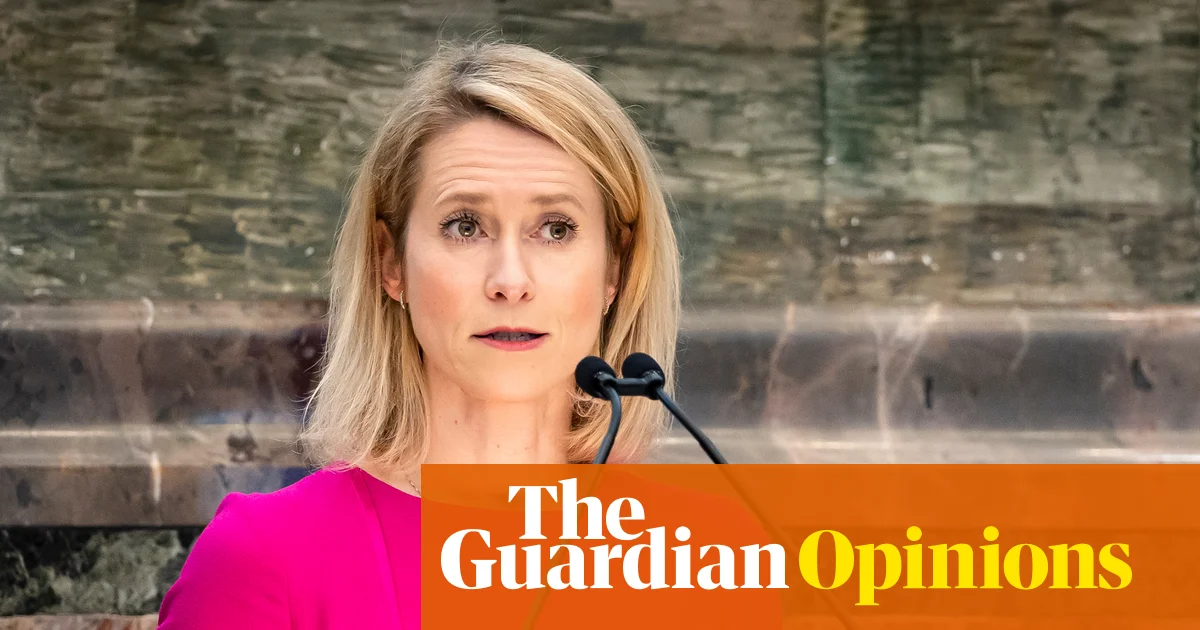
When European leaders were blindsided in January by Donald Trump’s unilateral abduction of Venezuela’s president, Nicolás Maduro, their immediate response was to hedge their bets. Kaja Kallas, the European Union’s top diplomat, affirmed that the principles of international law must always be respected, but also asserted that Mr Maduro lacked legitimacy. As a new Trump-compliant leadership emerged in Caracas, Europe’s attention drifted to crises closer to home.
The dilemmas and dangers posed by Mr Trump’s war of choice in Iran – again initiated with no attempt to consult allies or gain US congressional approval – are not so easily swerved. The US president has berated and mocked Sir Keir Starmer over a lack of full-throated support for his latest military adventure. He has threatened Spain with a trade embargo, after its prime minister, Pedro Sánchez, described the joint US-Israeli assault on Tehran as “unjustified and dangerous”, and refused to sanction the use of military bases. Even Mr Trump’s close ideological ally, the Italian prime minister, Giorgia Meloni, is under pressure from an electorate deeply hostile to involvement in another open-ended Middle East conflict with unpredictable consequences.
A degree of realism is necessary when judging how much influence Europe can bring to bear on Mr Trump. The US president’s claim on Monday that the war is reaching its endgame was designed to calm markets rather than mollify supposed allies. But while doing what is necessary to protect their interests in the Gulf, European governments also have a duty to stand up robustly for multilateral principles and norms which – however imperfectly adhered to – used to make the world a safer place.
Confronted by a US administration that views such values as a form of weakness, doing so from a position of strength requires a single-minded push towards greater strategic autonomy. In embryonic form, this process is already under way. Emmanuel Macron’s suggestion that the France’s nuclear umbrella could be expanded and extended beyond its borders implies a new paradigm for Europe’s defence. The French president’s assertion that the Iranian drone attack on an RAF base in Cyprus was “an attack on all Europe” pointed in the same direction. As the Iran war threatens global energy networks, the surge in oil prices has underscored the crucial security dimension of investing in the EU’s green transition, which has been relentlessly attacked by Washington.
Events since Mr Trump’s re-election have repeatedly underlined that an EU strategy of damage limitation and tightrope diplomacy only goes so far. Delivering a lecture last week at the university of Zurich – where Winston Churchill called for a “United States of Europe” to safeguard the postwar peace – Ms Kallas was considerably less equivocal than she had been in January. “Europe is collectively addicted to the way the world was,” she observed, “when there was understanding of the primacy of international law and the UN charter … Today the chaos we see around us in the Middle East is a direct consequence of the erosion of international law.”
As a reckless war that enjoys minimal popular support in the west plays out, Ms Kallas’s analysis underlines the need for a new moral clarity and unity of purpose. Exiled from a past in which “might” was at least partly constrained by “right”, Europe needs to reshape its present to make its voice heard.




Leave a Comment