

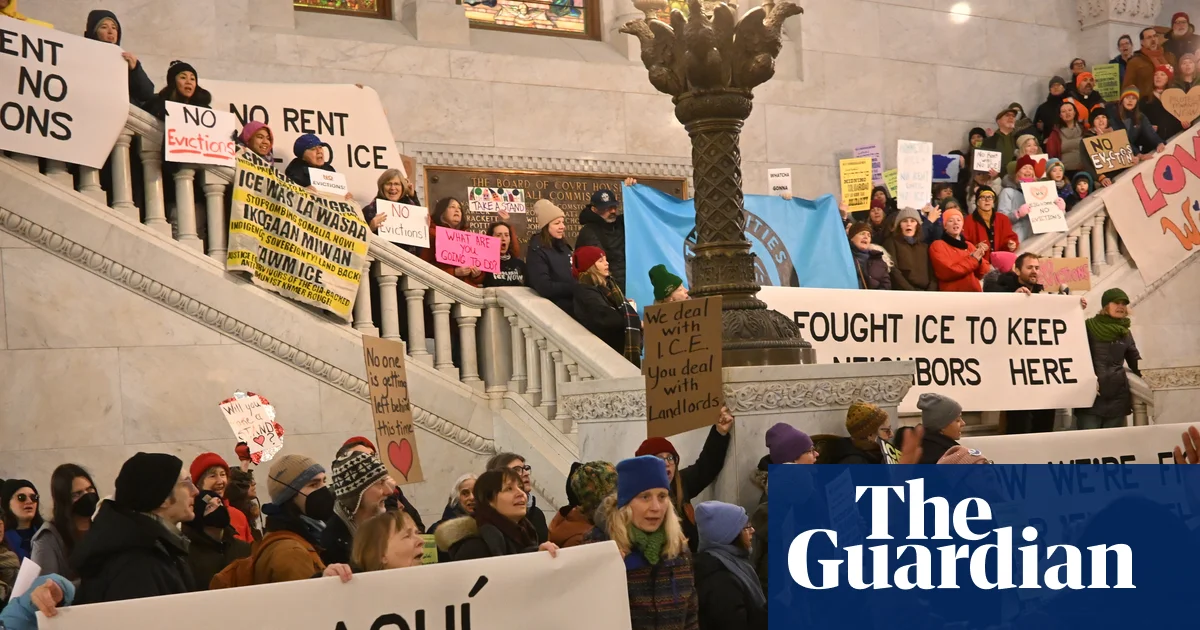
Nadia Langley had been organizing tenants in and around her south Minneapolis neighborhood since 2024, when, two months ago, the fledgling union saw a sudden explosion in interest.
The jump was prompted not by a downturn in housing conditions or a rise in rents, but by the arrival of thousands of federal agents in the city as part of the Trump administration’s recent mass immigration crackdown. Many immigrants and residents of color were afraid of agent run-ins and wouldn’t leave their homes, even to go to work. To protect their neighbors, residents organized group chats to alert their communities about immigration agent sightings and to provide food, aid and more.
“We were thinking, where do we fit into this?” Langley, 24, said about the city’s rapid response network. “How do you organize your building and connect with neighbors to respond?”
In the “whirlwind” few weeks that followed, Langley said she and renters, backed by labor unions across the metro region, came together to form Twin Cities Tenants and propose an audacious plan: withholding their March rent in an effort to force policy safeguards for those endangered by the immigration operation.
While Twin Cities Tenants ultimately didn’t get the numbers to strike this month, the move came as rent strikes have become increasingly common in recent years. Tenants in Los Angeles’ Chinatown locked in affordable rents in 2025 after a five-year strike. A union of tenants from four buildings in Chicago has been on strike since November, after their landlord raised rents up to 60%. Meanwhile, a handful of tenant unions across the country have formed a national coalition that focuses on strikes as a way to further renters’ economic and political power – particularly in states with weak tenant safeguards.
Rent strikes are not new, having taken place in the US for nearly two centuries, said Brandon M Weiss, a law professor at American University in Washington. But the strategy has received newfound attention since the pandemic, he said, as large corporate investors have increasingly bought up more rental properties, leading to a rise in rent. In response, there has been an increase not only in the number of rent strikes but also in their scope and sophistication.
“Beyond the sheer number of campaigns, the nature of these actions has evolved from building-specific demands for repairs into highly coordinated, multi-state efforts targeting entire corporate portfolios,” Weiss said.
Old strategy, new concerns
One of the first known rent strikes in the US began in 1839, when tenant farmers successfully organized against feudal landlords in New York. The strategy reappeared in New York City in the early 1900s after the first world war, and spiked again amid the economic turmoil of the Great Depression in the 1930s, with another wave in the 1960s when more than 2,000 residents in Harlem tenement buildings, predominantly Black and Puerto Rican, withheld their rent from the city. Among other outcomes, these actions succeeded in prompting the country’s first rent-control laws.
Today’s movement spans cities and states and is fueled by a nearly 20% national increase in rents since 2021, say organizers.
Tara Raghuveer, a longtime Kansas City organizer, helped found the national Tenant Union Federation (TUF) in 2024. Five renter groups came together in part “to experiment with ways tenants can exercise more power, more effectively and with a focus on economic power”, Raghuveer said.
“Tenants’ ultimate power is our rent, but that only matters if we’re organized, and if we know how to exercise that power,” she said. “So our first few years have been about the rent strike as strategy.”
TUF was involved in organizing in Minneapolis in recent weeks and is also working with groups in Kentucky and Montana, states that don’t have strong tenant protections.
While Raghuveer said she doesn’t have data on recent strike numbers, Missouri tenants scored huge victories over the past two years. Three strikes – one in Kansas City lasting eight months – helped tenants win rent freezes and reductions, schedules for major repairs and more.
“Now we feel more confident that we’re onto something: when we are really deliberate and strategic about the strike as strategy, it can produce outcomes that we otherwise can’t get to,” she said of strikes – or the mere threat of one.
Being strategic means extensive focus on preparation, which can take many months – a part of the process that Sosseh Prom, housing justice director with non-profit African Communities Together, has been working on with renters in Harlem since last summer.
The 100 to 150 tenants in the large, multi-building complex have been increasingly fed up with poor maintenance, pests and the recent recognition that the owners appear not to have been paying their utility bills, Prom said, declining to offer property specifics as organizing continues.
The first steps were revitalizing a defunct tenant association, gaining trust, educating residents on their options, even learning to create an escrow account to hold payments in the event of a rent strike – strategies that Prom says have received overwhelming support.
“This might be the first time this community is thinking about strategizing in a collective way,” she said. She said a strike could happen in the coming months.
‘Incredible power in their rent check’
In Minneapolis, tenant organizers had to work quickly.
Missing paychecks put the thousands sheltering in place in danger of losing their housing, said Yusra Murad, an organizer with Inquilinxs Unidxs por Justicia (United Renters for Justice), another tenant group. January evictions in Minneapolis and St Paul were up by 12% over December, and by more than a quarter over previous Januarys, organizers said.
“Home is one of the last places of safety for families being targeted,” Murad said.
Renters’ groups sought to push landlords to label buildings as private property and urge them to allow residents to post protest signs and engage in neighbor-to-neighbor organizing. They also banded together to push for broader policy help – such as a state eviction moratorium and a $50m rent relief fund – prompting the creation of the Twin Cities Tenants, backed by five local labor unions and representing nearly 43,000 members.
At the coalition’s first meeting in mid-February, members adopted a new goal: a rent strike, slated for the start of the following month, when rents would be due.
Twin Cities Tenants hoped to get 10,000 strikers, translating into an estimated $15m in economic disruption – and what they said would be the country’s largest rent strike in a century. Over two weeks of hectic organizing, Murad said around 270 volunteers knocked on doors and called 26,000 people. About a third of the renters they talked with agreed to take part in the strike, she said.
Still, asking tenants to do so is a complicated and risky proposition, especially at the scale envisioned, Langley said. While a tenant may feel comfortable refusing to pay rent with their entire building, it proved difficult to convince some that they would be safe in a more diffuse, metro-wide action – or that their participation was still useful, she said.
Ultimately, organizers were unable to get to a majority by 1 March, and the proposed strike was called off. In another blow to renters, the mayor of Minneapolis vetoed a proposal to extend the city’s eviction notice policy this week, proposing $1m in rental assistance instead.
Langley is not deterred. The challenges organizers faced are solvable, she said, noting that any future rent strike would just need more building-by-building organizing. An important seed has been planted, she said.
“Now people have the language of rent strike,” she said. “They’re able to recognize that they do have this incredible power in their rent check.”








Leave a Comment