

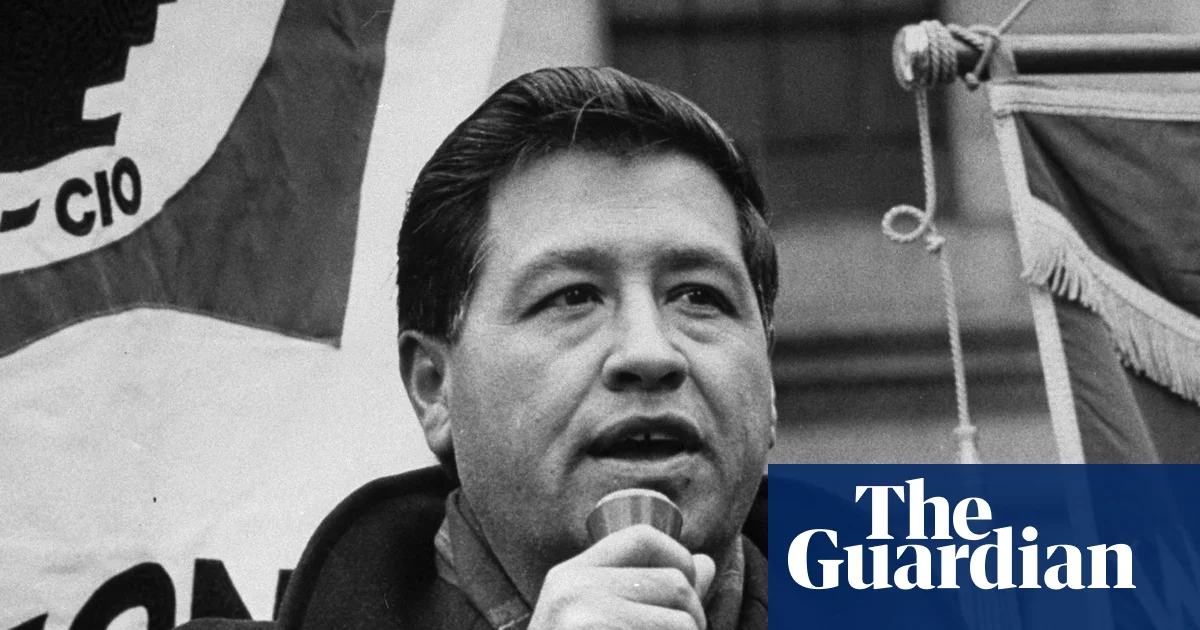
Lawmakers, union leaders and several community organizations expressed their dismay after allegations of inappropriate sexual behavior and abuse of young women or girls emerged against the late labor organizer César Chávez.
The New York Times released an investigation on Wednesday detailing the allegations, which revealed that for years the co-founder of the United Farm Workers union had groomed and sexually abused girls who were involved in the movement.
The report has led to multiple cancellations or rebranding of events that were meant to celebrate César Chávez Day, which is observed annually on 31 March, Chávez’s birthday. States including California, Arizona, Utah, Texas, Colorado, Oregon and Minnesota have recognized the holiday.
Before the Times released the report, media inquiries about the allegations prompted the UFW to cancel celebrations honoring Chávez, calling the allegations “disturbing”, “shocking” and “indefensible”.
The US representative Adelita Grijalva of Arizona, where Chávez was born, said she was “deeply troubled” by the allegations and extended her support for the victims.
The state of Arizona has announced it will no longer observe César Chávez Day on 31 March as a state holiday.
“To the survivors: estamos con ustedes – we are with you,” Grijalva said. “We hear you, we believe you and we admire the immense courage it takes to speak out.”
“I know that there is a profound sense of grief in our community today that may bring mixed emotions,” she said. “The betrayal of trust by a leader who had such a significant impact on our community is difficult to comprehend. It is OK to feel angry, shocked, heartbroken, saddened, confused and dismayed – all at the same time. We still have more questions than answers. However, it is important to remember that one person does not define a movement. We, the people, are the movement.”
The Times investigation includes allegations by Dolores Huerta, one of the country’s most influential labor activists and Chávez’s ally, who said he forced her to have sex with him in the 1960s. Huerta released a statement on Wednesday, saying she “can no longer stay silent”.
Huerta told the news outlet that Chávez drove her to a grape field in Delano, California, in 1966 and raped her. She was 36 at the time. The rape led to a pregnancy, as did a second sexual encounter, according to her statement.
Huerta had not publicly shared her story, and said in the statement that she chose to come forward after the Times “indicated that I was not the only one – there were others”.
California representative Lou Correa also condemned the late activist’s abuse of women.
“Whether it is the president of the United States, a British prince, or a leader of farm workers, all sexual predators must be held accountable,” Correa said. “There must be zero tolerance for sexual predators, especially those who prey on young children.”
Arizona governor Katie Hobbs became the first governor to say that her state would stop recognizing César Chávez’s holiday. A spokesperson for the governor said in a statement that she “is deeply concerned by the troubling allegations”.
“As a social worker who worked with homeless youth and victims of domestic violence, Governor Hobbs takes allegations of inappropriate sexual behavior against women and minors very seriously,” the spokesperson said. “The governor’s office has decided to not recognize César Chávez Day this year. Our thoughts are with the victims and all those affected.”
San Francisco mayor Daniel Lurie said in a post on X that he was “in touch with labor and community leaders in San Francisco and will continue to ensure we are supporting this community and all survivors”.
“It takes immense bravery to come forward, and my heart goes out to all of the survivors, including Ana Murguia, Debra Rojas, and Dolores Huerta,” he said. “The accounts of abuse are deeply disturbing and unacceptable.”
In Texas, La Union del Pueblo Entero (Lupe), another advocacy group co-founded by Chávez, is also cancelling events before the César Chávez holiday, calling the allegations against Chávez “indefensible”.
“LUPE in South Texas is an organization that was built primarily by women and is led primarily by women, and we understand the severity of this news and the pain and distress it will cause to so many people, especially survivors of abuse,” Lupe said in a statement.
The San Antonio Express-News reported in early March that the Cesar E Chavez Legacy & Educational Foundation in Texas announced it was cancelling its 28 March event, citing a “sensitive matter”.
Liz Shuler, president of the AFL-CIO, the US’s largest labor federation, said: “These horrific, disturbing allegations come as a deep shock to us. Our thoughts are first and foremost with any victims of assault and abuse who have described experiencing what no one – especially children – should ever have to survive. No legacy can excuse it.”
“The AFL-CIO unequivocally condemns the actions described in The New York Times article and supports a full investigation into these allegations. The AFL-CIO will not participate or endorse any upcoming activities for Cesar Chavez Day.”
In the Bay Area, several groups addressed the allegations and are considering renaming memorials that honor Chávez.
Myrna Melgar, a member of the San Francisco board of supervisors, told the Times that the street and the elementary school named after Chávez will be renamed “in due time”, and called for the conversation to revolve around the harm for now.
The César E Chávez Community Action Center at San José State University said in a statement that “it is appropriate that we pause to determine our next steps”.
In Sacramento, a local news outlet reported that the city’s annual Chávez march was still on as of late Tuesday, though organizers were discussing a possible “rebrand”.
Xavier Becerra, former US health and human services secretary and former California attorney general, emphasized the impact made by the UFW and called the allegations against Chávez “a painful side to this story”.
“Iconic labor leader Dolores Huerta has come forward to tell her story and use her voice to empower other survivors to tell their story,” Becerra said. “We must stand behind the truth and those who live it.”
California US senator Alex Padilla called the allegations “heartbreaking” and commended the women who came forward. His remarks come about a year after he and US representative Raul Ruiz introduced legislation to create the César E Chávez and the Farmworker Movement national historical park.
“These are heartbreaking, horrific accounts of abuse,” Padilla said. “I stand with the survivors, commend them for their bravery in sharing their stories and condemn the abhorrent actions they described. The survivors deserve to be heard. They deserve to be supported. They deserve to be treated with dignity and respect.”
Chávez gained international prominence with boycotts and fasts for higher wages and better working conditions for immigrant workers who picked grapes and performed other agricultural labor. He died in 1993 at the age of 66.







Leave a Comment