

When the US and Israel launched an attack on Iran to start a war that is now entering its third week, it was the start of something unprecedented; the first joint Israeli-American war. Even though the US has long been a close military ally of Israel, this has never happened before. Unlike last year’s “12-day war” where Israel launched a war that the US joined near the very end with a single set of strikes on Iran’s nuclear facilities, this Israeli-American war on Iran is deeply coordinated at the operational level between both belligerents day in and day out.
That is precisely why clear, shared objectives between Washington and Tel Aviv will be crucial for the US to exit this war with a political victory and not just the tab for tons of destruction across the region with little significant change. Much of what we have seen so far suggests strongly that that is not the case; Israel and the US have different goals here, if they even really know what their goals are, and because of this no clear endgame can be envisioned even as the costs of the war mount.
From the outset the messaging around the war by Washington has been confused. Days before the war was launched, the president of the United States in his state of the union address touted low gas prices and the little he mentioned about Iran suggested he preferred a negotiated outcome. Once the war began, spiking gas prices shortly thereafter, the administration couldn’t get on the same page about why the US was at war.
Reasons given by administration officials and their allies spanned from saying Iran got to a place “where they could deliver 11 nuclear bombs”, Israel made the US do it, to prevent Iran from using a “conventional umbrella to continue [its] pursuit of nuclear ambitions”, Iran simply still had “nuclear ambitions” even though its sites had been obliterated, Iran has somehow been an imminent threat for 47 years and also regime change, to name a few.
With so many reasons for why the US went to war, it is perhaps unsurprising that there is a range of different timelines coming from Washington on how long the war is expected to last. On 2 March, Trump said he expects the campaign to last four to five weeks but that it could “go far longer than that”. Two days later, war secretary Hegseth said it could be “six, it could be eight, it could be three weeks”. By 9 March, after oil approached $120 a barrel, Trump said the “war is very complete, pretty much” and then said the war will end “soon” but not this week.
On 11 March, Trump said it will end soon and that “any time [he] wants to end it [he] will end it”. We’ve also seen other indicators from US agencies suggesting a timeline. The treasury lifted Russian oil sale sanctions through 4 April and the Pentagon, Politico reported, is preparing for contingencies that the war will last “at least 100 days but likely through September”.
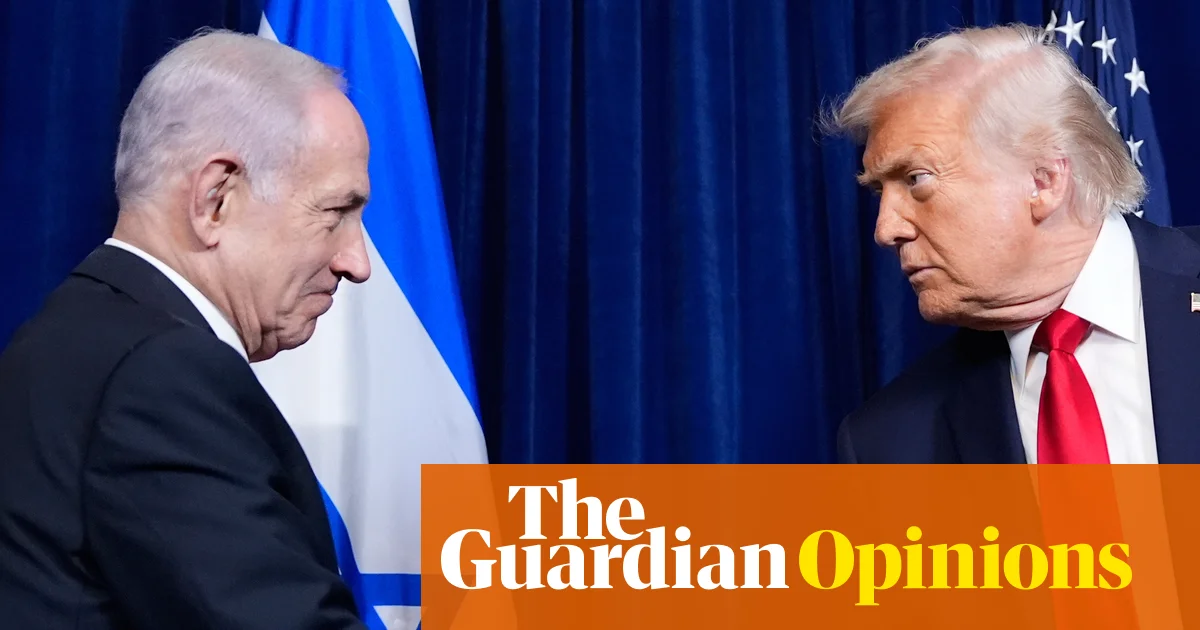
Why is it so hard to figure out when objectives will be met? The primary reason why is that the US is a co-belligerent with another military in this war, Israel, which very likely has different objectives and it may be Benjamin Netanyahu, not Trump, that is in the driver’s seat. Trump has said that the decision to end the war will be a “mutual decision” with the Israeli prime minister, in effect giving the Israelis a veto over the use of the US military. So what happens if the US has seen enough of this war, a war most of the American public never wanted, even though Israel wants to continue? With the economic costs of this war of choice piling up, that seems to be the dead end we have inevitably arrived at, precisely because Netanyahu needs something else out of this war than Trump does.
The signs of this problem have been there from the outset if you have been paying close attention. A few days into the war, Trump said that after the initial Israeli strikes that killed the Iranian supreme leader, the United States had some Iranian leaders in mind who might be able to take over. This Venezuela-like outcome is one Trump clearly prefers: quick, performative, low-cost victory that he can tout without the sort of long-lasting, messy and costly regime change wars he campaigned against.
But there was a problem, Trump admitted: “Most of the people we had in mind are dead.” He continued: “Now, we have another group. They may be dead also, based on reports. So I guess you have a third wave coming in. Pretty sure we’re not going to know anybody.” What Trump leaves unsaid here is how his Venezuela-style exit strategy kept getting killed off. The answer is: Israeli strikes.
It was not just human targets that seemed to divide US and Israeli war aims in this joint campaign; it was also certain infrastructure. Israel struck oil facilities in Tehran that led to apocalyptic scenes in the Iranian capital, heightened Iran’s resolve to target oil infrastructure in neighboring US allies, sent shockwaves into the oil market which puts the greatest pressure on Trump, and poisoned the environment in a city of 10 million people.
Washington was unhappy with this and reports indicate it has made that clear to Tel Aviv. Confirming this, even Lindsey Graham, the US senator who has been the war’s biggest proponent in the US and who admitted to meeting with Israeli intelligence as part of an effort to sell the war to Trump, advised Israel against continuing to target such facilities.
The differences between what Trump and Netanyahu want out of this war are increasingly starting to show and complicating how, when and on what terms it will end. Just like the strike with the B-2 bombers last year in Iran and with the Venezuela operation, Trump was hoping for a quick, low cost “victory”. Netanyahu needs something different.
This was Netanyahu’s decades-long dream: to get into war with Iran and, now with US support, he hopes to topple the regime and install an Israeli-American client dictator. The protests which took place in Iran in December likely helped Netanyahu sell the war plan to Trump; Israel would decapitate the regime, the US would strike at Iran’s capabilities, and the Iranian people would quickly take care of the rest before the situation got out of hand. That is not how it has played out.
Netanyahu wanted to take out Ayatollah Khamanei and spur regime change in Iran, instead, at least as of now, what he got was a younger Ayatollah Khamanei, a more embittered enemy in Iran, and American public angry about the war and its cost, a US president who will pay the political price for it and an Israeli public who is staring at a future of endless war instead of the New Middle east Netanyahu promised. Surely, this isn’t how he or his war-mongering allies in the beltway drew it up, but here we are.
In addition, sitting in the growing gulf between Israeli and American desired outcomes in Iran are the Gulf states themselves. These are American allies who were most directly put at risk by an Israeli and American war that ignored their most vital security interests. Netanyahu likely hoped, just as Lindsey Graham keeps agitating for, that Arab Gulf states will join the Israeli-American attack on Iran. If regime change in Iran is not achieveable, 20 years of the region’s Muslims fighting each other wouldn’t be a bad consolation prize in Israel’s view. But so far, that isn’t happening either, as Gulf Arab states feel stuck between a wounded and angry Iranian regime which will continue to be their neighbor and an expansionist, genocidal Israel that wants to dominate the region at their expense.
So how does this actually end? If answers to this all important question are not known before a war of choice is launched, the war itself will likely be a failure. And, perhaps the most important thing is, Iran has demonstrated that it too will have a say in answering it.








Leave a Comment