

On 29 January this year, after the kidnapping of Venezuela’s Nicolás Maduro but before the assassination of Iran’s Ayatollah Khamenei, President Trump turned his attention to another country. He issued an executive order declaring a national emergency against the government of Cuba, ruling it an “unusual and extraordinary threat” to the United States and threatening to impose tariffs to stop ships from carrying petroleum to Cuba. It was an evident bid for regime change.
The actions to deny oil to Cuba have severely exacerbated a growing crisis on the island, with even some US congressional representatives denouncing the measures. Cuba produces about one-third of its own oil needs and imports the rest – mostly from Venezuela and Mexico. After the US attack on Venezuela and the tariff threat, both countries completely halted oil exports to Cuba. Since early February, the length of daily power outages has doubled, lasting about 18 hours a day.
I began travelling and researching in Cuba more than 12 years ago, before Barack Obama’s historic opening and normalisation of relations from 2014 to 2016 – a period of economic effervescence and great hope, of young people making plans, ideas flourishing, US tourism surging and private businesses popping up everywhere. Cuba during the Obama administration felt like a very different place than it does at this moment, where desperation is setting in – as I saw first-hand on my latest trip.
I landed in eastern Cuba last month, a day after President Diaz-Canel announced a series of petroleum austerity measures. The measures ending gasoline and diesel sales to the public were quickly followed by the cancellation of airline routes to Cuba, an inflationary surge caused by higher fuel prices and a weakening Cuban peso. Taxis lay empty, school hours had been cut, large events had been postponed and university students were being sent home. The first to feel the pain of these policies are ordinary people.
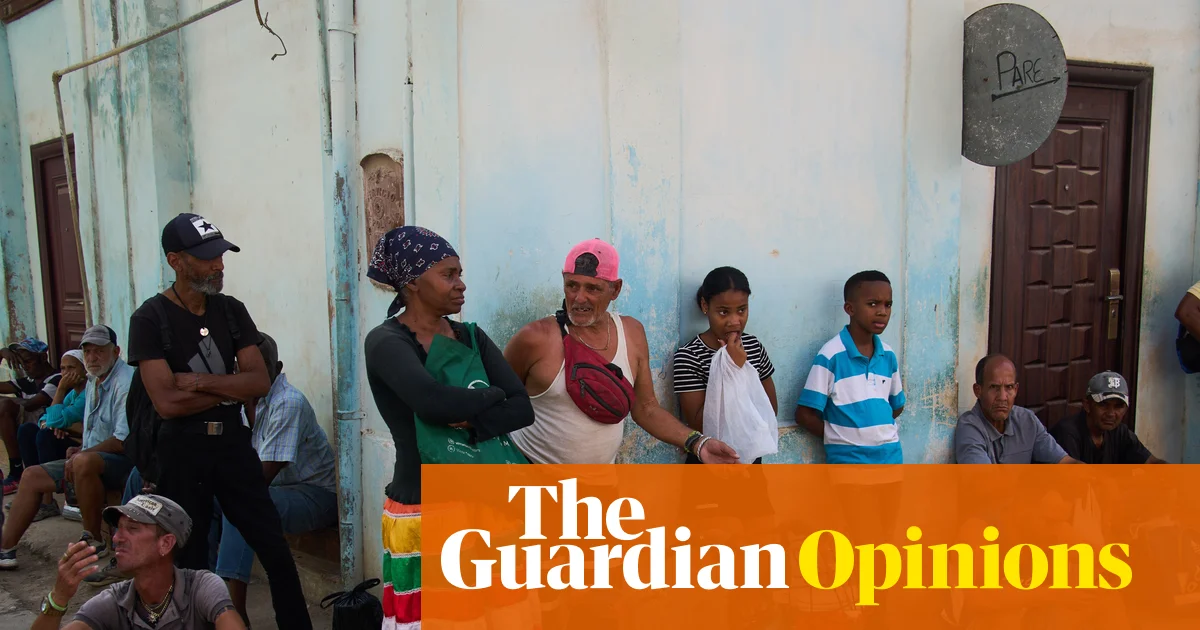
Cubans are enduring real hardship. The massive disruption in their daily lives and routines is affecting their ability to find food, get where they need to go and communicate with others. I saw that the price of chicken had risen from 400 to nearly 600 pesos a pound in days – a price tag nearly out of reach for anyone earning a modest government salary. Citizens with the ability to raise money abroad are organising to fund popular kitchens, which feed the neediest, but they have few ways to fund these projects and the Trump-induced obstacles to international money transfers hamper their efforts. In Guantánamo City, I saw that bakeries are still making bread, but they are all running on firewood.
With local mobile phone towers without fuel, people away from city centres are left without reliable forms of communication when the electric grid is off; the rapid buzz of a phone when a slew of messages sent hours earlier arrive all at once is a sign that the towers have regained power. Cubans are also waking up in the middle of the night, when the power is switched on, to get to the kitchen, cook the day’s meals, make coffee, charge devices and do house chores. It is mentally and physically taxing and they are visibly strained.
Cubans insist that they are resilient, that they will get through this. But, as they also point out, this crisis – which grew as Trump’s first administration reversed Obama’s normalisation policies and enacted harsh new economic sanctions on the island in 2017 – feels worse than what they faced in the “special period”, when the fall of the Soviet Union caused Cuban GDP to drop 35% over three years. The government has rolled out a strategic plan to get through the crisis, which includes ceding state enterprises to small and medium private companies and significantly increasing the reliance on solar technology. So far, it is just about managing.
While it is true that Cubans have grown tired over the years of the government blaming its woes on sanctions, the current petroleum blockade feels like it is bringing people together. (Historically, economic sanctions have failed in their stated goals and even backfired, severely harming innocent people.) On the trip, I spoke to 70 or 80 people in eastern Cuba from all walks of life: teachers, business owners, farmers, historians, elderly folks, children, transportation workers, state employees and community leaders. I held extended conversations with dozens of those – some who are fiercely critical of the government, its politics and ideology – and not one of them agreed with the US measures. One woman who owns a private business told me fiercely that they would resist US intrusions. Her two employees, both members of neighbourhood-level government councils, agreed intensely. They were by no means the only people I spoke to who raised their voices in strong opposition to Trump’s policies, insisting, to my surprise, that they would fight back.
In recent days, tensions with the US have only grown. Last month, Cuban nationals on board a speedboat from Florida fired on the coastguard as it neared Cuban soil – something not seen in decades. Four of the men aboard were killed in the gunfight and the other six injured. Trump has since blithely floated what he called a “friendly takeover” of Cuba and the Republican senator Lindsey Graham has insisted publicly that “Cuba is next”. The Cubans I met were visibly heartbroken about what the US is doing. But perhaps the biggest lesson about Cuban history that American politicians often miss is that Cubans are resolute nationalists; they have fought time and time again to gain and maintain their independence, even when it has meant direct opposition to the US.





Leave a Comment