

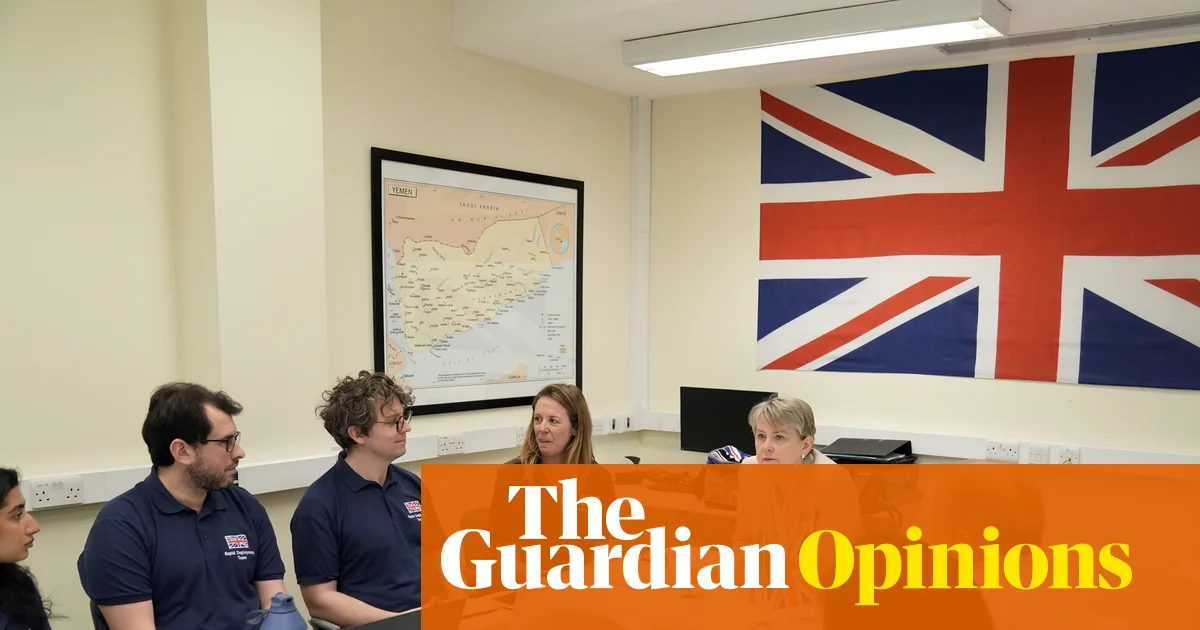
Of all the concerns in the world, the demise of the Ferrero Rocher ambassador might not be top of the agenda. In days gone by, thanks to an excruciating TV advert, the chocolate with the golden wrapping was synonymous with the diplomatic circuit. You really had made it if you offered them up to your bejewelled and bemedalled guests.
That was the 1990s. Almost all diplomats I have met over the years are very serious and very hardworking. They still must schmooze and dress up on occasion, but most of their time is spent trying to fathom out what’s going on and reporting that back to base, often from difficult places.
Thanks to Donald Trump, the job has got a whole lot harder. The basic tenets of British foreign policy have been shattered. Yet many of the problems predate him and are self-inflicted. Brexit stares diplomats in the face every day, requiring rictus smiles when reminded of the decade-old decision. Its consequences are not just the obvious ones. One is the informal exchange of ideas and experience that occurred at various EU gatherings; now Brits must knock on the door.
The so-called “reset” that Keir Starmer promised occurs in fits and starts. In keeping with his manner of governing, it frustrates all sides. Underlying it is a wider problem: the absence of a realistic strategy for Britain’s place in the world.
A combination of hubris and underconfidence guided the relationships of Margaret Thatcher and Ronald Reagan, Tony Blair and George Bush, and David Cameron and Barack Obama. (The Boris Johnson era was about managing humiliation.) Even under serious prime ministers, Britain luxuriated in its permanent membership of the UN security council, the Commonwealth and influential role within Nato. The first of those is now paralysed, and the second irrelevant. The third remains true, but it has not gone unnoticed that while Germany still aims in principle to reach the new target of 5% defence spending (including critical infrastructure) by 2029, and Poland and the Baltics are strong too, the UK is likely to struggle to get there even by 2035. Talking the talk has never been the problem.
For many politicians, wallowing in monolingual mediocrity, all roads led to Washington, particularly after Europe was dispensed with. The “special relationship” was a term used by successive US administrations to keep the Brits sweet. The diplomatic equivalent of stroking a cat, it worked well for all. Until it didn’t. Trump has turned the transaction entirely to his benefit, pocketing an unprecedented two state visits and then spitting out his contempt for Starmer.
The reality, as most seasoned British diplomats know, has been much more nuanced than politicians pretended. Behind the scenes, they have tried to develop insurance policies, investing in a variety of bilateral and multilateral relationships. These take language skills, expertise, time – and proper funding.
Just when they are needed most, these are being drastically cut back. For reasons of rivalry, the Treasury has always had it in for the diplomats across the courtyard in Whitehall. Downing Street has sometimes shared that disdain, depending on the incumbent. Now, in a further act of self-harm that will damage British interests for a generation, they are taking a scythe to the Foreign Office.
Up to a quarter of its 8,000 UK-based jobs are at risk, starting at the top, at director general level, and then moving through the ranks. Many of those affected do the unsung but vital work of policy analysis. The remaining 9,000 based abroad are next for the chop. The official line is that the department is “transforming to be more agile and focused”. There may well be savings to be made on administration. But as one diplomat told me: “I’m not sure we will be best served if we type ‘Angola’ into ChatGPT and see what comes out.”
The damage is already being done. Many talented figures have already left, for academia, thinktanks or the private sector; others spend part of their days job hunting or competing against each other for dwindling positions – perhaps not the best way for the country to be navigating the Middle East war, Trump, Russia-Ukraine and tariffs.
Yvette Cooper, who has inherited a funding “deal”, has made Sudan one of her biggest priorities, and yet cuts in Africa departments and the broader global south are among the most stringent.
The plans have been attacked by MPs across the parties. In parliament earlier this month, the chair of the foreign affairs select committee, Emily Thornberry, called them “restructuring in order to restructure, while not looking first and foremost at what the Foreign Office is about”. The Conservative MP John Whittingdale drew a link between the Foreign Office and damaging cuts to the British Council and BBC World Service.
The UK is not alone. Germany is among several similar partners that are restructuring diplomatic personnel and soft power institutions, as more resources are devoted to defence spending. Yet diplomacy is neither isolated nor elitist; it is integral. Sharp antennae serve to give early warnings on climate, health, migration, demography, indeed pretty much every aspect of people’s lives. There is barely a challenge that isn’t shared and doesn’t require strong collaboration.
Shorn of institutional links with Europe and of a reliable partner across the Atlantic (to put it mildly), the UK is more vulnerable and is forced to be more reliant on its own resources. This is no time to cut back on expertise.






Leave a Comment