

When Marcel Ruiz slumped into the grass of San Diego FC’s Snapdragon stadium late in the first half of Toluca’s Concacaf Champions Cup game last Wednesday, he seemed to already know. He covered his mouth with his left hand and clutched his right knee – first the back of it, then the front – with his other hand. He turned his head every which way, perhaps hoping that he might scan something or someone who would tell him that this was not in fact happening. That his World Cup on home soil was not already over three months before it was to even start. That Mexico’s injury crisis had not just deepened further.
Ruiz is only 17 matches into his international career for El Tri, yet the central midfielder has firmly established himself as an important cog in Mexico’s setup with his clean passing and defensive cover. More pertinently, the 25-year-old was part of a young core finally asserting itself on a team that long felt caught between generations and suffered through a lackluster autumn, winning none of their six friendlies against World Cup-bound teams.
With Ruiz ruled out with a torn anterior cruciate ligament, Mexico is now without the services of six players who appeared in the come-from-behind Gold Cup final victory over the United States last summer, including its entire starting midfield. Captain and anchor Edson Álvarez finally had surgery on his long-ailing ankle and is in a race to recover for the big tournament; 17-year-old sensation Gilberto Mora has been sidelined by a sports hernia for two months now.
Also out are forwards Alexis Vega and Santi Giménez (with knee and ankle injuries, respectively). The latter is the only one of this half dozen not to start in that final, and the Milan man may well need to be in Mexico’s lineup at the World Cup, given that his rival at striker, Raúl Jiménez, will be 35 by then, and battered by the long Premier League season. Midfielder Luis Chávez started all three of Mexico’s matches at the 2022 World Cup but is a question-mark as well as he concludes his rehab from a torn ACL. So is Rodrigo Huescas, a contender to start at right back.
Then there’s Luis Angel Malagón, the presumptive starting goalkeeper. He tore his Achilles in Club América’s Champions Cup tie at Philadelphia and was beset by so many reporters upon his return to the airport in Mexico City that he had to scold several of them to stop bumping into his freshly-operated-on foot.
Such has been the swelling panic around this rash of injuries. Because looming over it all is the proclamation by Mexico manager Javier Aguirre that only fully fit players will be eligible for his squad.
While the United States men’s national team suddenly finds itself with a glut of fit and in-form players – and probably wouldn’t at all mind of the summer’s tournament was moved up by three months or so – the World Cup’s third co-host, Canada, faces its own injury worries.
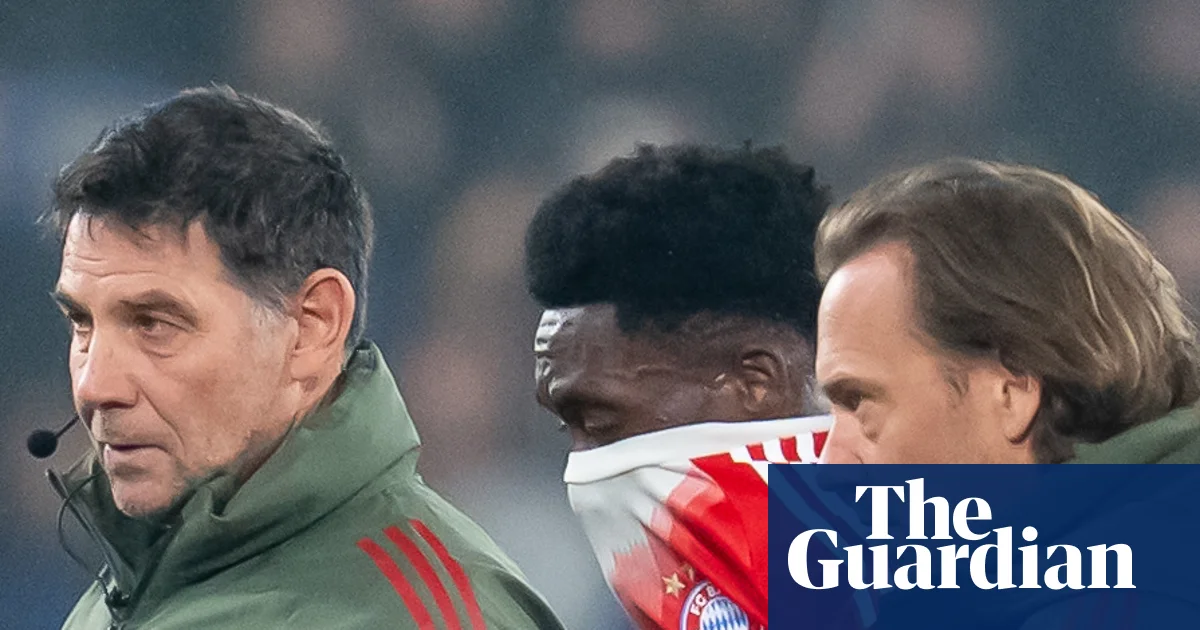
The Canadians’ captain, superstar and left-flank fulcrum Alphonso Davies has not appeared for his nation in almost a year, after tearing his ACL against the United States in the Concacaf Nations League in March of 2025 (an incident that sparked a furious finger-pointing spat between Canada and his club, Bayern Munich). Such have been his injury issues that he has logged a mere 528 minutes for Bayern this season. Last week, he strained a hamstring after just 26 minutes on the field in a Uefa Champions League bout with Atalanta, ruling him out for Canada yet again.
While Davies and his continued absence may be manager Jesse Marsch’s biggest headache, the rest of the back line may concern him just as much. After all, defensive stalwarts Moïse Bombito and Alistair Johnston were named to the March camp before friendlies with Iceland and Tunisia as “training players.” Alfie Jones is out altogether, while Derek Cornelius and Luc de Fougerolles were named to the playing roster but are also carrying injuries. Bombito and Cornelius figure to be Canada’s starting center backs at the World Cup. Johnston, the only player not from South America on the 2024 Copa América Team of the Tournament, will probably play on the right.
Further upfield, midfield heartbeat Stephen Eustaquio is out with a knee injury; Promise David, the 24-year-old striker on Belgian champions and Uefa Champions League participants Union Saint-Gilloise, had surgery on his hip in February and may not recover in time for the World Cup either.
There tends to be something fluky about doing well at a World Cup. Some confluence of the right timing and bounces and luck and preparation alchemizes into the requisite goals at opportune times. It’s been almost eight years since the 23rd World Cup was granted to North America. Its participants have been planning for it ever since. But there’s no hedging against the inevitability of injuries. And for Mexico and Canada, their timing could yet turn out to be incredibly unfortunate.
In 2010, South Africa became the first World Cup host not to survive the group stage. Qatar became the second in 2022. This time, with a 48-team format that will graduate 32 teams to the knockout stages, the odds for the three host teams are as good as they have been in a long time.
But presently, it seems terribly possible that 2026 could be the first World Cup where two hosts don’t survive the opening round.
-
Leander Schaerlaeckens’ book on the United States men’s national soccer team, The Long Game, is out on 12 May. You can preorder it here. He teaches at Marist University.









Leave a Comment