

It started off as a normal Tuesday. On 25 March 2025 I reviewed applications from university students applying for a summer research position at my lab. I told friends I would bring pastries from Harvard Square for the Friday dinner we were planning. I finalized my schedule for an upcoming child development conference. I worked on my dissertation proposal.
The day was busy but not unusual – until I left home after quickly dressing for an iftar dinner at the interfaith center. What followed was my first personal encounter with human-made trauma through state violence.
After a few minutes of walking, masked individuals suddenly surrounded, handcuffed and forced me into an unmarked car. I was unlawfully arrested, transported across state lines and detained for six weeks in inhumane conditions in a for-profit ICE prison in Louisiana because I co-authored an op-ed in the Tufts Daily. The piece affirmed the equal dignity of all people and urged the university to uphold the democratic resolutions of the undergraduate student body – including recognition of the Palestinian genocide.
Until then, I had not known that governments read school newspapers. I certainly did not know someone could be baselessly punished for expressing ideas in the US, a country that historically valued freedom of speech, the country where I have spent most of my young adulthood years learning and growing as a scholar and contributing to the child development field.
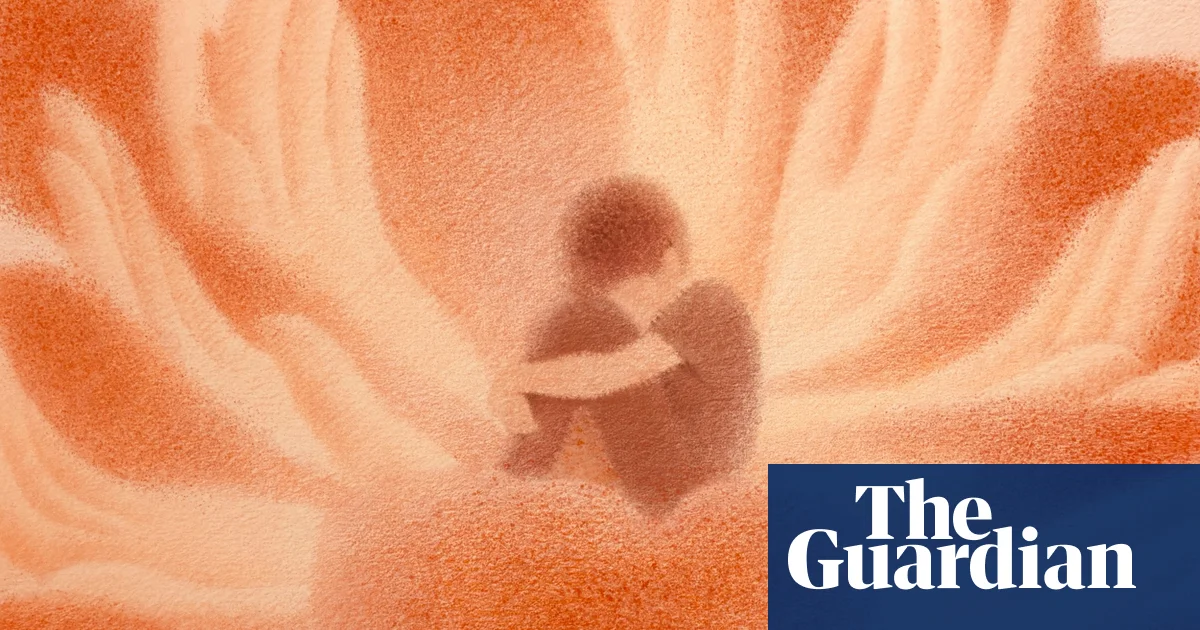
Trauma, with its unexpected and overwhelming nature, shatters your sense of safety and security. Simple activities become challenging. For me, many mornings now begin in sadness, and intrusive memories occupy my days. I escape some days to sleep, only to wake up with recurring nightmares of violence. Some days, numbness prevails: I spend hours wanting to cry but find myself unable to shed a tear. I often have a profound, unending fatigue.
I had previously encountered human-made trauma more conceptually – as a 21-year-old college student during a course simply called Trauma. At the time, I also volunteered with an art and music project led by an international team that assisted Syrian refugee children. I vividly recall the children’s bodies trembling from anxiety and fear, their rapid startle reflexes, and the trauma evident in their artwork: their use of bold colors and depictions of death, violence and separation. The children’s beautiful eyes would often be fixed on the wall, their expressions distant and numb.
The literature distinguishes between traumas caused by the behavior of other people and those caused by natural disasters. For example, earthquakes – like the one I experienced as a five-year-old during the 7.6-magnitude Marmara earthquake in Türkiye, 1999 – can be experienced as trauma caused by natural disasters. Within seconds, everything around me was reduced to dust and rubble. In the neighboring apartment, just one person survived.
Natural disasters like this generally have a clear beginning and end. The impacts last, but survivors know that the event was beyond human control. In the case of my community, many of us were able to accept what had happened, come together and rebuild our lives.
Human-made traumatic experiences are often more challenging to recover from. The harm comes not just from the event itself, but from the knowledge that another person deliberately chose to inflict pain or deny basic needs. This stark realization undermines your sense of trust and safety – if humans can cause pain without any reason, the world is not safe or predictable any more, and the body constantly feels under threat.
While detained in a for-profit ICE prison, I learned how other people – in this case, some prison staff – can cause suffering. They chose to dehumanize me and the women I was detained with. They denied us essential needs like medical care. They shouted in anger. They made us wait in hours-long lines for food, medicine, and to be counted. They denied us our religious rights. These acts of cruelty were conscious choices, making the trauma more profound.
After going through this ordeal, today, I feel a stronger connection to others facing human-made trauma – particularly children living under war, conflict or oppression, who have long been a focus for me, both personally and academically. Going through my ordeal as an adult, I had certain privileges: an academic background in psychology and human development, mental and inner resources, and strong friendships and community ties in the United States, Türkiye and worldwide. I also had the benefit of years of positive memories and joy, saved and accumulated in my knapsack for hard days. Children often lack some of these tools and supports due to their limited life experience, making them particularly vulnerable.
The War Child Alliance published a report in December 2024 that found that 96% of the children they had surveyed in Gaza felt that death was imminent, and almost half reported wanting to die. Read that one more time and let it sink in: children who should have been playing, learning, singing and enjoying life – wished for death instead. This is a human-made trauma – one we are all responsible for.
“The occupation is starving us. We have no food or water and are forced to drink unsafe water. We’re here to shout and ask you to protect us … We want to live like other children.” So said children pleading from a press conference they held in Gaza held outside al-Shifa hospital on 7 November 2023. Their message was clear – they don’t want bombs; they want food and education. When children feel forced to advocate for themselves and demand the right to live, we are already in a horror story. It is one we must take action to remedy.
In her book Trauma and Recovery, the psychiatrist Judith Lewis Herman explains: “The solidarity of a group provides the strongest protection against terror and despair, and the strongest antidote to traumatic experience. Trauma isolates; the group re-creates a sense of belonging. Trauma shames and stigmatizes; the group bears witness and affirms. Trauma degrades the victim; the group exalts her. Trauma dehumanizes the victim; the group restores her humanity.’’
Human-made traumas demand human help to heal. Healing requires all of us. On the day of my unlawful arrest, one of my neighbors heard my scream and went to his balcony. As I was gripped with fear that no one would know that this horror had happened to me, he witnessed the moment, and recorded and shared it. Learning that someone had borne witness to my trauma helped me understand that I was part of a caring community – where I belonged and was valued.
The trauma I experienced taught me first-hand how acts of human violence cultivate isolation, shame and fear. It also taught me the value of a community in one’s healing. My friends and community gave back more than what others sought to take. The collective care I have received – from friends dedicated to baking and cooking for me, colleagues who remind me I’m beloved, my lawyers who do all they can so I can focus on my PhD dissertation, and anonymous supporters who send letters of love – is enabling my ongoing recovery.
I often wonder: what would it mean to suffering children if they knew they were cared for by so many people all over the world? The support I received helped me learn that even a few minutes of attention can transform someone’s path to healing. I believe that this kind of care can help children suffering, even thousands of miles away. What if we offered just a few moments of our lives to care for them? There are countless ways to do this work. Two of them are grieving and taking action.
Grieving is a testament to our humanity, a sign that we insist on feeling instead of giving in to numbness. Grieving for suffering children – who bear the cost of crimes they did not commit, trapped inside the consequences of someone else’s power grab – is also a way to build a global community united through care. As James Baldwin said: “The children are always ours, every single one of them, all over the globe.”
Grief allows space for processing and connecting. It also can spur action.
Taking action, however small, is always better than doing nothing in the face of overwhelming grief. We can listen, bear witness, engage in conversation, write, donate and engage in other civic forms of advocacy to support children’s lives and wellbeing. If you hold privilege – including the privilege of being an adult, with more power and opportunities for expression – this is a vital moment to speak up publicly against the atrocities committed against children everywhere, from children who are experiencing genocide in Gaza, war in Sudan, oppression and re-education in Uyghur camps, the dehumanization of American immigration detention centers and heartbreaking experiences in so many other places in the world.
We are all setting the norms and the tone about how children are and will be treated, with every word, choice and action. Also with our silence.
Today, Gaza is reduced to rubble. The ceasefire in effect is fragile, the bombing continues, and too many are still deprived of the resources required to heal, such as medical care and humanitarian aid. Even under the most optimistic circumstances, recovering from this human-caused trauma will be arduous for generations of children.
I want those children to know that so many of us care about them, mourn with them, feel their hunger, hear their cries and screams, witness their pain, lose sleep for them, weep, pray, speak, write, share, donate and want to support them in any possible way. I want them to know how many of us tried, with our small hands, to stop the wars.
One day, they might. They may grow up to read what we write and share. They may know someone heard their screams and held space for their grief. They may feel less alone, more a part of a global community that witnesses their pain and wants to relieve it.
I now know that the care of strangers is a powerful testament to pain. I have to believe that the care of our global community could, at least partially, restore fragments of childhoods stolen by war and atrocity. As Lewis Herman reminds us: “Trauma dehumanizes the victim; the group restores her humanity.’’







Leave a Comment