

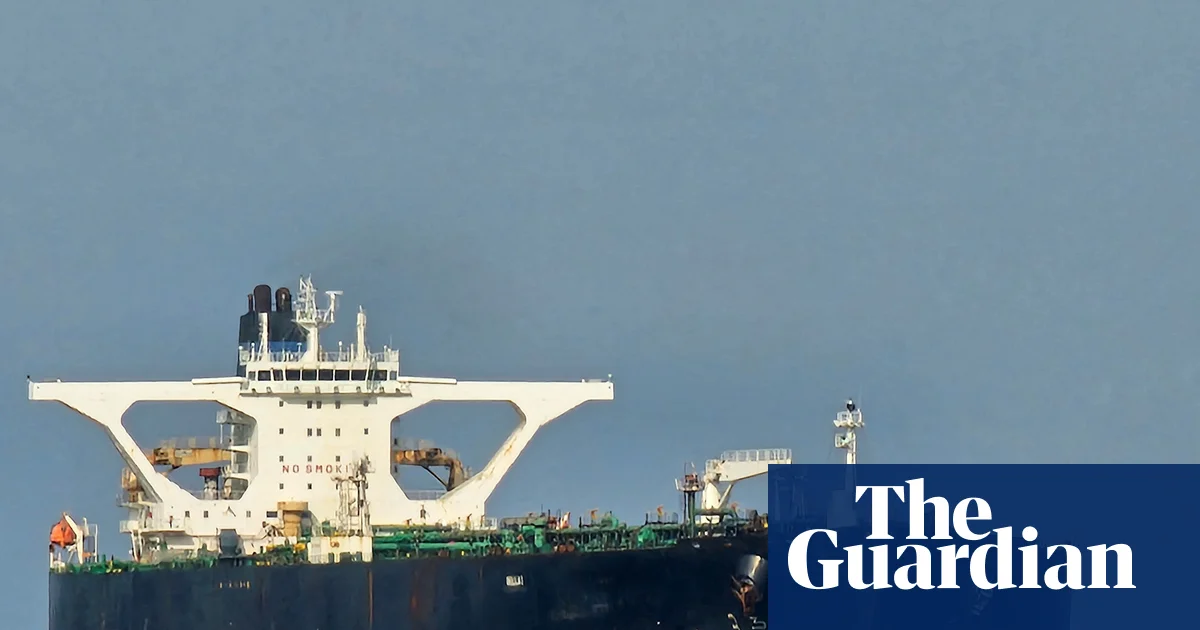
The US has seized a Russian-flagged oil tanker in the Atlantic Ocean in a high-stakes operation that could risk confrontation with the Kremlin, after Moscow reportedly dispatched a submarine to safeguard the vessel
US media reported that the country’s coastguard had successfully boarded the oil tanker, facing no resistance.
The Russian state broadcaster RT earlier published two grainy photographs showing a helicopter approaching the tanker, saying an operation was under way.
The Marinera tanker had been navigating in the Atlantic between Iceland and the UK, according to ship-tracking data from MarineTraffic.
The Wall Street Journal reported that several helicopters and at least one coastguard vessel were being used to take control of the tanker.
The seizure marks the culmination of a dramatic US pursuit lasting more than two weeks, which began after the tanker turned back into the Atlantic while travelling from Iran to Venezuela, having attempted to evade a US blockade targeting sanction-hit oil tankers operating near Venezuelan waters.
The operation – the first known US military seizure of a Russian-flagged vessel in recent history – is likely to strain relations with Vladimir Putin, coming at a sensitive moment as negotiations over a potential peace deal in Ukraine continue and after the US capture of Venezuela’s president, Nicolás Maduro, a longstanding Kremlin ally.
The vessel is part of the so-called shadow fleet moving oil for Russia, Iran and Venezuela. It was placed under sanctions by the US in 2024 over allegations it carried illicit cargo for a Hezbollah-owned company
Initial reports suggest the ageing tanker is empty, having been en route to pick up Venezuelan oil before turning away. Even so, Moscow appears to have gone to considerable lengths to protect the vessel, raising questions about why it is willing to risk a standoff with the west over it.
The Wall Street Journal reported late on Tuesday that the Russian navy had deployed a submarine to escort the tanker, heightening the stakes of any confrontation in the North Atlantic.
In the 24 hours preceding the operation, multiple western surveillance flights were observed over the vessel, including aircraft from US bases in Iceland and RAF Rivet Joint and P-8 Poseidon planes from the UK, which are capable of detecting submarines.
In December, the crew repelled an attempted US boarding near Venezuelan waters. The vessel was subsequently renamed from Bella to Marinera 1, a Russian flag was painted on its hull and it was added to Russia’s official shipping registry. Moscow later lodged a formal diplomatic protest demanding that Washington halt its pursuit.
The tanker departed the Gulf of Oman in November, transiting the Suez canal and the strait of Gibraltar before crossing the Atlantic in early December. As US pressure on Venezuela intensified – culminating in the capture of Maduro – the vessel stopped abruptly near the Caribbean on 15 December and reversed course, heading back towards Europe.
Marinera’s return journey across the Atlantic has been markedly atypical, according to marine transport experts. Instead of taking the usual route through the Channel, the tanker veered sharply north, steering into the stretch of ocean between Iceland and Ireland.
Registry data reviewed by the New York Times showed that at least three other oil tankers that have operated in Venezuelan waters in recent weeks had since been reflagged under the Russian banner, pointing to a growing trend of Moscow extending its registry to vessels facing US sanctions.
The move could complicate relations between Moscow and Washington at a time when Donald Trump has shown frustration with Putin over Russia’s continued fighting.









Leave a Comment