

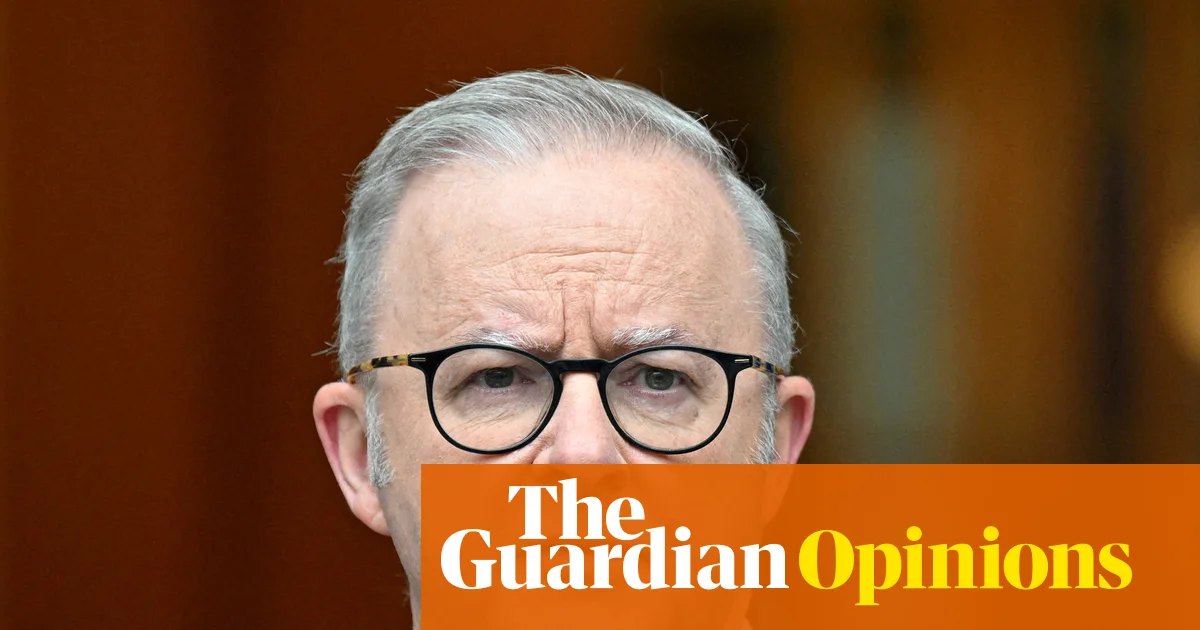
A group of public service chiefs gathered on Thursday night for a quiet dinner in Canberra to send off Australia’s new ambassador to the US.
There was lightning and heavy rain outside the upmarket Pan-Asian restaurant Chairman and Yip, but inside the private dining room the mood was cheerful.
Due to replace Kevin Rudd on 1 April, the outgoing defence boss Greg Moriarty is headed to a Washington that would be unrecognisable to most of his predecessors.
If it wasn’t already clear that the US under Donald Trump is an ally of Australia in name only, this week should have ended any doubt. Little more than a year into his second term, Trump has devolved from a chaotic force in the White House to a strategic risk for Australia – and Australian households and businesses look set to be big losers.
Now three weeks into the US-Israeli war of choice in Iran, the Albanese government is rapidly updating its budget forecasts and warning of economic pain and higher petrol prices out to 2029.
Inflation as high as 5% this year is likely and Treasury modelling suggests a longer lasting war could result in a 0.6% hit to GDP in 2027, a cost of about $16.5bn to the economy. On Thursday, the treasurer, Jim Chalmers, pushed out the timeline for reviving sluggish productivity from two to five years.
One upside could be increased revenue from commodities, like Australia experienced from Vladimir Putin’s invasion of Ukraine. The soaring gas price has already led to signals from Labor about openness to introducing a new 25% export levy, something the Greens and David Pocock have been calling for.
Chalmers held emergency talks with the Council of Financial Regulators on Friday, a group that includes the Reserve Bank governor and the bosses of Asic and Apra. The ACCC and the Treasury secretary, Jenny Wilkinson, also attended. Much of next week’s sitting of parliament will be focused on the fallout from Iran.
At home, growing fuel shortages risk slowing down farmers and the transport sector, with allegations of price-gouging already under investigation by the competition watchdog. Labor tried to brush off the Coalition’s claims that the government had lost control of the situation, saying it had put about 520m litres of extra petrol and diesel into the system. Chris Bowen stressed that all expected deliveries into Australia have arrived so far, despite the growing regional conflict. Still, some service stations have closed, including in major cities.
Trump’s disregard for alliances is not new, but having failed to consult with countries like the UK, France or Australia before launching strikes against Tehran, the US president slammed Nato members, as well as Japan, South Korea and Australia, for not sending ships to unblock the strait of Hormuz, a key strategic route for global oil supply.
“The United States has been informed by most of our NATO ‘Allies’ that they don’t want to get involved with our Military Operation against the Terrorist Regime of Iran, in the Middle East,” the social media post read. “We no longer ‘need’ or desire, the NATO Countries’ assistance – WE NEVER DID! Likewise, Japan, Australia, or South Korea.”
Things got even more absurd on Friday as Trump met with the Japanese prime minister, Sanae Takaichi. After he joked about Japan’s attack on Pearl Harbor in the second world war, Trump lapped up praise from his guest. The Financial Times reported officials in Tokyo had briefed reporters that the new Japanese leader planned to be effusive at the White House, having judged that a combination of flattery and promises of investment would distract from Japan’s reluctance to dispatch military vessels to the conflict zone.
The Coalition frontbencher Andrew Hastie best assessed the Trump social media barb this week, telling ABC radio that the comments were “petulant” digs from a president under immense pressure. “I just don’t think that’s how you treat allies. I think it’s a reflection on his character more than us,” he said.
Usually reticent to say much at all about Trump to the media, Albanese broke with his usual practice and sent a public signal to the Oval Office. In a radio interview, he urged the US and Israel to wrap up hostilities, because the original justifications for the war – including degrading Tehran’s nuclear program and curbing its missile capabilities – had already been achieved.
It was a moment of candour. Albanese said it was unclear when the war would end, but he was hopeful it would be soon. He said Trump would ultimately make the decision, allowing the world to get “back on its normal axis”.
The prime minister understands Trump’s psychology, including his need to feel like a winner – and that domestic American pushback on the war, as well as criticism from other world leaders, would be weighing heavily on his ego.
Israel’s prime minister, Benjamin Netanyahu, said the war would take as long as necessary, but that fighting could stop “a lot faster than people think”. Trump faces difficult midterm congressional elections in November, with Democrats likely to win back the House of Representatives. Control of the Senate could even be in play if the war drags on.
The economic cost of the conflict isn’t the only risk for Albanese here. An Iranian projectile struck near Australia’s headquarters at the Al Minhad airbase in the United Arab Emirates this week, damaging accommodation and a medical facility. Australian defence personnel being caught up in the fighting, even if their current mission is purely defensive, would be difficult for a government that was quick to endorse Trump and Netanyahu’s bombings on day one.
It’s clear why some Labor MPs are increasingly uncomfortable with Australia going all the way with Trump, but so far criticism from within the caucus is muted.
Despite the good cheer at dinner in Canberra, Moriarty faces a difficult few years as envoy to Trump’s Washington. Just how well Albanese and Labor handle an unreliable friend could significantly shift politics here at home.







Leave a Comment