

Few debates from the last few years have been more contentious than whether criticism of Israel and Zionism is antisemitic, threatens Jewish people or violates their civil rights. Allegations of antisemitism have cost people jobs, provided pretexts for censorship and fueled an unprecedented crackdown on protest over Israel and shows of support for Palestinian rights, especially at universities.
Pro-Israel groups have filed hundreds of lawsuits or legal actions in an effort to silence some of this speech, with the vast majority filed since 2023 in response to the protest movement surrounding Israel’s recent war in Gaza. The most important rulings to have come out of these cases, experts say, have found that speech and slogans at the heart of the controversies are protected by the first amendment.
A number of the rulings also state that the speech at issue is not antisemitic and does not violate the civil rights of Jewish students. Together, those decisions are delivering a blow to pro-Israel groups’ legal campaign to shut down protests and criticism of Israel through the courts.
“The courts have said, ‘We agree, this is first amendment protected speech,” said Radhika Sainath, an attorney with Palestine Legal, which filed briefs in many of the cases. That, she continued, has resulted in “wins for Palestinian rights because they are starting to create a body of law”.
Among long-debated phrases that courts have found are protected speech are phrases like “from the river to the sea, Palestine will be free” and “globalize the intifada”.
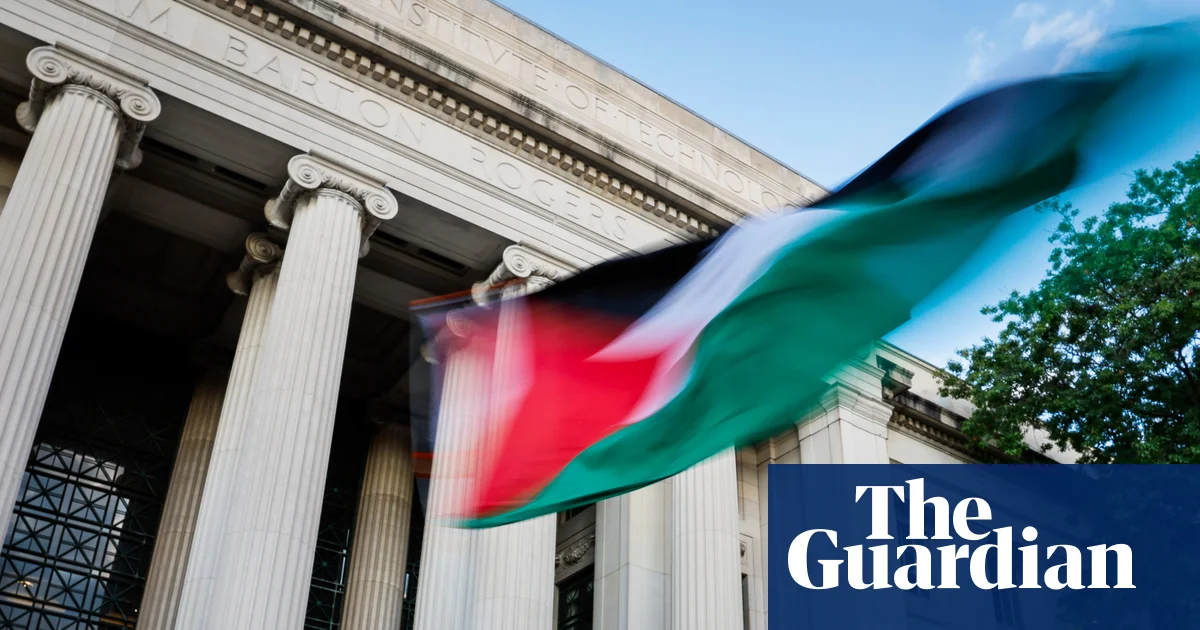
Some judges have been unequivocal in their orders. “Plaintiffs are entitled to their own interpretive lens equating anti-Zionism (as they define it) and antisemitism. But it is another matter altogether to insist that others must be bound by plaintiffs’ view,” a first circuit court panel wrote in its dismissal of a lawsuit brought by pro-Israel groups and Jewish students against MIT.
However, the context in which the slogans are uttered is important, and some judges have allowed claims to move forward if the speech singled out individual students.
Along with first amendment experts from the American Civil Liberties Union, New York Civil Liberties Union, Palestine Legal and a former US attorney, the Guardian reviewed key rulings issued through the end of 2025 that the experts said are shaping legal precedent. Those include five cases brought against universities under Title VI – the provision of the 1964 Civil Rights Act that prohibits discrimination on the basis of race, color and national origin in programs that receive federal funds, as most universities do. During his first term, Trump expanded Title VI protections to Jewish students.
In those cases, plaintiffs claimed that the universities had violated Jewish students’ civil rights by not doing enough to limit pro-Palestinian action. In all five rulings, judges largely found otherwise.
The cases are “among the most prominent in public discussion about the intersection of Title VI hostile environment claims and the first amendment”, said Brian Hauss, the deputy director of the ACLU’s Speech, Privacy, and Technology Project. “They will play an outsize role in shaping how courts, regulators and university officials understand the issue.”
Many of the orders are being appealed and other cases are ongoing, so any body of precedent is still in formation. Additionally, American universities have cracked down on pro-Palestinian protest even without the prospect of losing in court, in response to the Trump administration’s unprecedented pressure campaign to clamp down on progressive speech in higher education.
But the rulings are a blow to a broader project to use the law to crack down on pro-Palestinian speech. The Trump administration has withheld billions of dollars in funding from universities on the grounds that they’re not doing enough under Title VI to protect students from antisemitism, a campaign that has also faced an uphill climb in court.
In a lawsuit brought by Harvard against the administration over frozen funds, a judge ruled in September on the university’s behalf, writing that she found it “difficult to conclude anything other than that [the Trump administration] used antisemitism as a smokescreen for a targeted, ideologically-motivated assault on this country’s premier universities”.
‘The protesters did not render their speech antisemitic’
Critics have called the strategy of pro-Israel groups bringing such cases “lawfare” designed to silence criticism of Israel. Judges in MIT case echoed that idea.
Responding to claims that “from the river to the sea” calls for the genocide of Jews, the panel that heard the MIT case wrote: “Plaintiffs must again rely on a theory that they can dictate the interpretation of the protestors’ speech in order to suppress it.” The MIT order is the only appeals court ruling on the issue since October 2023, which is significant in that it creates binding precedent.
Some of the claims were unlikely to ever succeed, legal experts said, but were mainly intended to chill protests. The Brandeis Center, a pro-Israel law firm that is leading some lawsuits, said its cases “showcase the litany of antisemitic conduct Jewish students and faculty are facing, and where we need courts, federal authorities and universities themselves to uphold laws protecting civil rights”.
Pro-Israel advocates bringing these lawsuits have argued that Jewish identity is so entwined with Israel and Zionism that certain forms of criticism can amount to a civil rights or Title VI violation. The surge of lawsuits is broadly asking the courts to codify that theory.
“For the most part, courts have said that that doesn’t fly when we’re talking about expressly political speech that isn’t targeted at a specific person or group because of their ethnicity or national origin,” the ACLU’s Hauss said. “Impassioned views about Israel and Palestine, even if offensive to some, are broadly protected under the First Amendment.”
In Landau v Haverford, Jewish students brought a lawsuit against the Pennsylvania college alleging it allowed an environment hostile to Jews to flourish on campus. The plaintiffs suggested in their complaint that people who wear keffiyehs support violent resistance against Israel, but judges dismissed the suggestion, calling keffiyehs a “classic example of first amendment expression”.
Judges in the MIT case also wrote that other common claims made by pro-Israel groups, including “that the existence of a State of Israel is a racist endeavor” or “comparisons of contemporary Israeli policy to that of the Nazis” are protected speech.
“We therefore reject plaintiffs’ claimed right to stifle anti-Zionist speech by labeling it inherently antisemitic,” the judges wrote.
However, context is important. Someone at Cooper Union wrote “from the river to the sea” on a bathroom stall door in the same font used on the cover of Mein Kampf. A judge in Gartenburg v Cooper Union allowed that claim to move forward, noting the “use of distinctive lettering associated with Hitler’s manifesto” could constitute an act of intimidation. In another Title VI case brought by the Brandeis Center against UC Berkeley, a judge ruled that the case could proceed because that the center “plausibly alleges that Berkeley was deliberately indifferent to the on-campus harassment and hostile environment”. That case continues.
But judges rejected claims from plaintiffs in the MIT case who alleged that “die ins”, disruptive walk outs during class, and other protests that violated campus rules violated Jewish students’ civil rights, ruling that the conduct was protected by the first amendment. “By gathering together in groups on campus, disrupting campus tranquility, and impeding travel for many students, the protestors did not render their speech antisemitic, much less unprotected,” the judges wrote.
The judge in the Gartenburg case, however, found that one protest at Cooper Union could plausibly constitute a Title VI civil rights violation. During that protest, pro-Palestinian students chanted “Free, Free Palestine” while beating on the door of a library room in which several Jewish students had locked the door.
“That feels a little bit more threatening, and arguably is inciting imminent lawless action,” said Tim Heaphy, a former US attorney in the Obama administration and former general counsel for the University of Virginia. “But if it’s out on the public square, or a microphone on stage and there’s no single person being singled out – that’s probably protected. That’s where context comes in and matters.”
Cooper Union and the plaintiffs settled in early January the claims that the judge allowed to move forward.
Some Title VI claims that universities did not do enough to shut down pro-Palestinian speech or criticism of Israel have been dismissed because plaintiffs weren’t able to show that their schools were “deliberately indifferent” to a hostile environment faced by Jewish students. However, schools named in the five suits had responded with some measures against the pro-Palestinian advocates, and took action to limit protests.
Still, the pro-Israel groups that brought the suits wanted the school leaders to go even further.
That drew skepticism from some judges. In a lawsuit brought against the University of Pennsylvania, the judge’s summation captured much of the sentiment across the orders: “I could find no allegations that Penn or its administration has itself taken any actions or positions which, even when read in the most favorable light, could be interpreted as antisemitic with the intention of causing harm to the plaintiffs,” the judge wrote.
“At worst, plaintiffs accuse Penn of tolerating and permitting the expression of viewpoints which differ from their own.”








Leave a Comment