

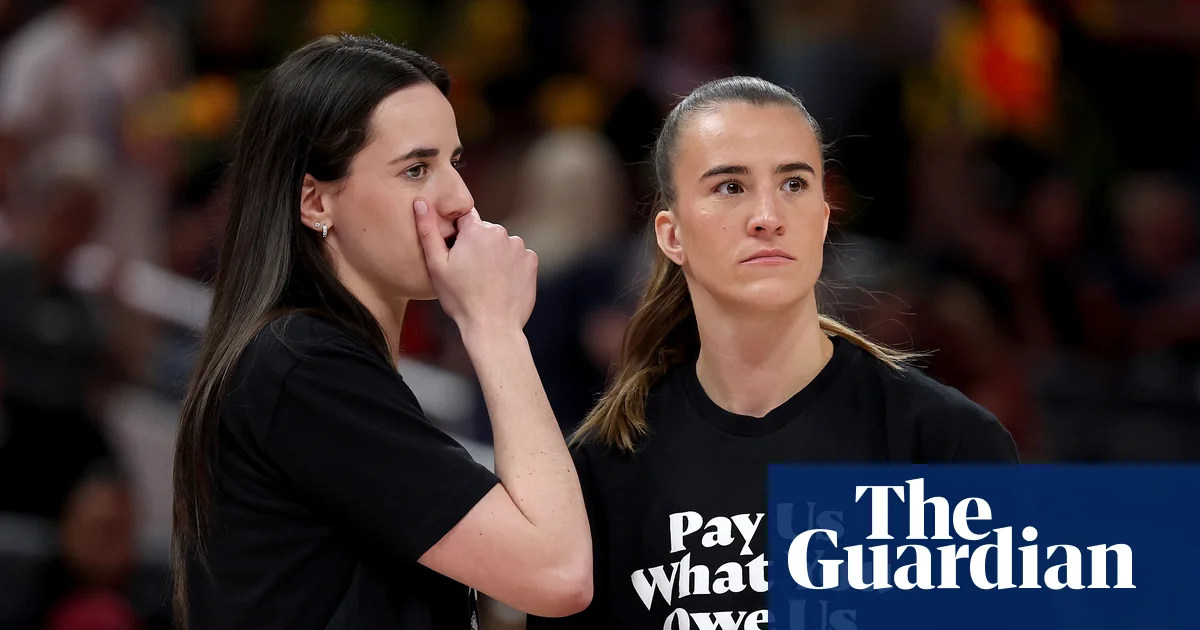
The WNBA and its players’ union (WNBPA) have reached a verbal agreement on a new collective bargaining agreement, ending 17 months of negotiations after players opted out of the previous deal and averting mounting fears of a strike.
The agreement would be the sixth in league history and is being framed by both sides as a major step forward for player empowerment and the league’s growth.
Commissioner Cathy Engelbert said Wednesday the two sides have “aligned on key elements”, though a formal term sheet still needs to be finalized. Union leaders echoed that sentiment, calling the deal a reflection of players using their collective voice.
Full details have not yet been released, and the agreement must still be ratified.
League operations – including expansion drafts for new teams in Toronto and Portland, free agency and the 2026 draft – cannot begin until paperwork is completed, a process that could take weeks.
Despite that, the WNBA expects its 30th season to tip off on schedule on 8 May. Here’s a breakdown of what the new deal means and how it could reshape the league.
What is a CBA?
A collective bargaining agreement, or CBA, is essentially a legal contract between a league and its players that sets the rules for how everything works – from salaries and benefits to working conditions and league operations. It’s not unique to sports and many industries with unions around the world have similar agreements with their employers.
The WNBA’s last CBA was signed in January 2020, just before the Covid-19 pandemic forced the league to play that season in a bubble.
That deal expired in October 2025, and the league and players’ union quickly began negotiating a new one.
What are the details of the agreement?
Two of the biggest sticking points were money and housing. Let’s take them one by one.
First, revenue sharing: players initially asked for 40% of the league’s total revenue (before expenses), later coming down to 26%. The league, meanwhile, offered roughly 70% of net revenue (after expenses). That gap was central to negotiations.
Second, housing: the WNBA has traditionally covered housing for all players, a significant benefit given the league’s relatively short season. In negotiations, the union pushed to keep that system largely intact, proposing that all players receive housing for the first few years of the deal before phasing it out for top earners.
The league countered with a more limited plan – full housing in year one, then restricting it to rookies and minimum-salary players – turning housing into another key flashpoint in balancing rising pay with longstanding benefits.
Early reports suggest the new deal includes major financial gains for players. According to ESPN’s reporting:
-
The salary cap could rise to about $7m (up from $1.5m)
-
Players would receive roughly 20% of league revenue across the length of the deal
-
Top “supermax” salaries could reach $1.4m
-
Average salaries could be around $600,000, with a $300,000 minimum
-
The 2026 draft is set for 13 April
These details have not yet been officially confirmed by the WNBA or WNBPA.
Did anyone “win the deal”?
It’s too early to declare a clear winner, since the full terms haven’t been released. But both sides are presenting this as a rare mutually beneficial outcome.
Engelbert called it “a fair win-win for all”, while players emphasized that the goal wasn’t just immediate gains, but long-term progress.
Union president Nneka Ogwumike said much of the fight was about “the next generation”, adding the deal should help push the league forward over the next decade. Union leadership also stressed that what benefits players ultimately benefits the league, framing the agreement as shared success rather than a one-sided victory.
WNBPA executive director Terri Carmichael Jackson also told reporters: “Cathy and her team understood that the players’ wins were the league’s wins and that our stories of success are shared stories of success, period.”
Are WNBA players now paid fairly compared to other leagues?
It depends on what you compare to.
Stacking WNBA salaries against the NBA isn’t especially useful. The NBA is a much older, far more established business that didn’t become highly profitable until the 1980s, four decades after it launched. The WNBA is entering just its 30th season.
But compared to other women’s pro leagues, the reported terms will make WNBA players among the highest paid. Recent reports suggest major salary increases, with top players potentially earning over $1m annually.
For context, the National Women’s Soccer League’s minimum salary is $50,500 (to reach $82,500 by 2030), according to their CBA signed two years ago. The league recently introduced a caveat where high-profile players can negotiate salaries that soar well above the minimum (as proven by Trinity Rodman’s recent case). The three-year-old Professional Women’s Hockey League operates with a total team salary cap of around $1.3m.
So while there’s still a gap with men’s sports, the new deal marks a significant step forward within women’s sports.
Does this mean the WNBA season will start on time?
Yes. Engelbert confirmed the league schedule is unchanged: training camps open on 19 April, preseason games begin on 25 April and the regular season tips off on 8 May.
Will it affect the draft process?
No. The 2026 WNBA draft is scheduled for 13 April. Dates for the two expansion drafts and the start of the free agency period have not been announced.
Does this mean peace is here to stay in the WNBA?
This deal should bring stability for now. The new agreement is expected to last several years, meaning the league and players aren’t likely to revisit these negotiations anytime soon.
Will WNBA players still need to play overseas?
Probably less, but not entirely.
For years, many WNBA players have gone overseas in the offseason to earn extra money. That’s been less necessary for top stars such as A’ja Wilson or Caitlin Clark, who make significant supplementary income through endorsements and brand partnerships. Others play abroad for the life and career experience as well as the pay.
The new deal could change that. Union leaders say salaries are set to rise sharply, with average pay expected to climb into the hundreds of thousands. That means more players may be able to stay in the US year-round.
Still, not everyone will earn top-tier money, and some players will continue to go overseas by choice.
Players say the agreement is “transformational”, with improvements not just to pay but also to benefits, facilities and overall working conditions, changes they believe will be felt across the league.
“What we just accomplished is going to change the lives of so many players,” union vice-president Alysha Clark said. “Players like me are going to feel it the most, and that’s what we’re all proud of – making sure every player felt the change in the CBA, and that’s exactly what has happened.”
Did the league’s recent surge in popularity change the leverage players had?
Absolutely.
The WNBA is coming off a record-setting 2025 season, with more than 2.5 million fans attending games and TV audiences rising sharply. The league has also announced plans to expand to new cities, a signal of growing investment and demand.
That momentum gave players more leverage in negotiations. Fans made their support visible, chanting “Pay them” at last summer’s All-Star Game and several games since then.
As a result, the new deal is expected to tie player pay more directly to the league’s financial growth for the first time, meaning players could earn more as the league earns more. Some could even make over $1m in a season.
All of this growth was driven by increased interest and passion for the league, the players, and the game.
Is this a turning point for women’s sports pay?
Yes, and it’s part of a much larger trend.
The WNBA deal reflects a broader shift across women’s sports, where athletes are pushing for better pay, working conditions and a bigger share of the revenue they help generate.
In soccer, for example, players in the NWSL have pushed back on league proposals they felt undermined fair pay rules, while top stars have increasingly attracted higher salaries, sometimes overseas. Earlier fights, such as the US women’s national team’s equal pay lawsuit in 2016, helped set the stage for today’s negotiations.
Similar battles have played out in hockey, surfing and other sports, as athletes demand equal treatment and professional standards.
The WNBA agreement stands out because of its scale and profile, but it is part of a larger movement that has been building for years and is now starting to reshape how women’s sports are valued.







Leave a Comment