

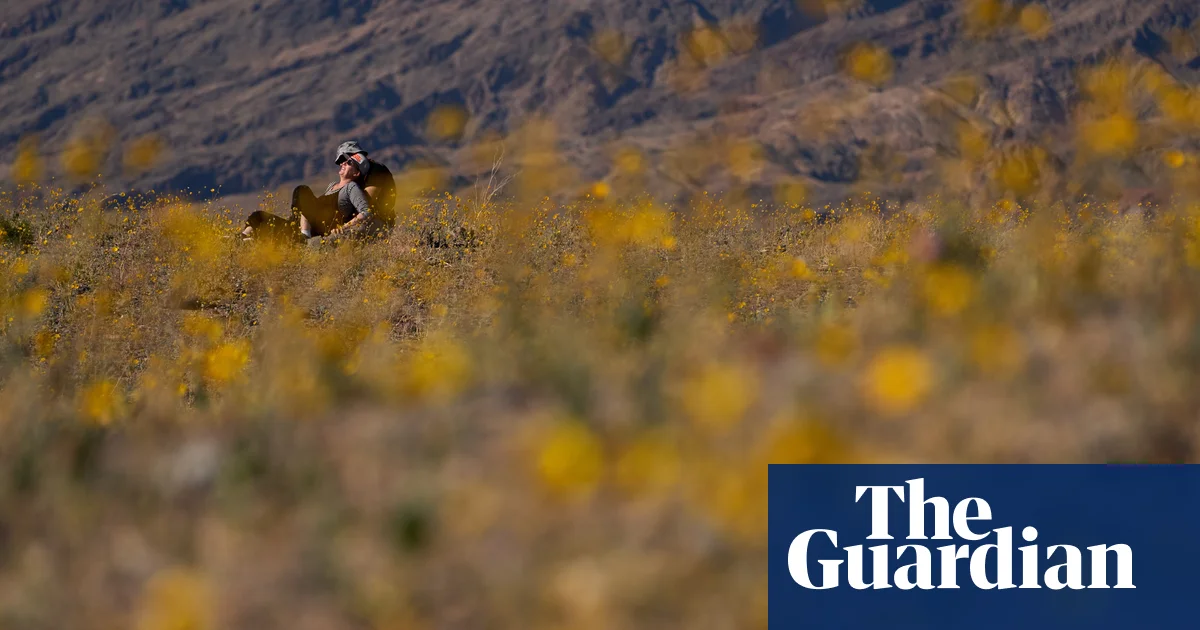
After a winter of record rainfall, a superbloom has erupted in Death Valley, covering the famously arid desert in a blanket of vibrant pink, purple and yellow flowers. As travelers from around the world make their way to the desert, they can expect to be greeted by fragrant air and a quilt of delicate hues.
While there is no official definition for a superbloom, the National Park Service uses the term to “describe conditions when so many flowers are present that they appear as swaths of color across the landscape, rather than isolated plants, especially striking at low elevations where the ground is typically sand, gravel and rock”
The park last experienced a superbloom in 2016, which can only occur in “perfect conditions”, with “well-spaced rainfall” and mild temperatures.
The National Park Service said that low-elevation flowers would continue blooming until mid to late March, depending on the weather. Higher elevations will experience blooms in April through June.
Time is of the essence to catch a glimpse of the superbloom, so if tourists can get there in time, they should keep an eye out for some of the most commonly occurring (and eye-catching) flowers: desert gold, brown-eyed evening primrose, golden evening primrose, phacelia, mojave poppy, to name a few.









Leave a Comment