

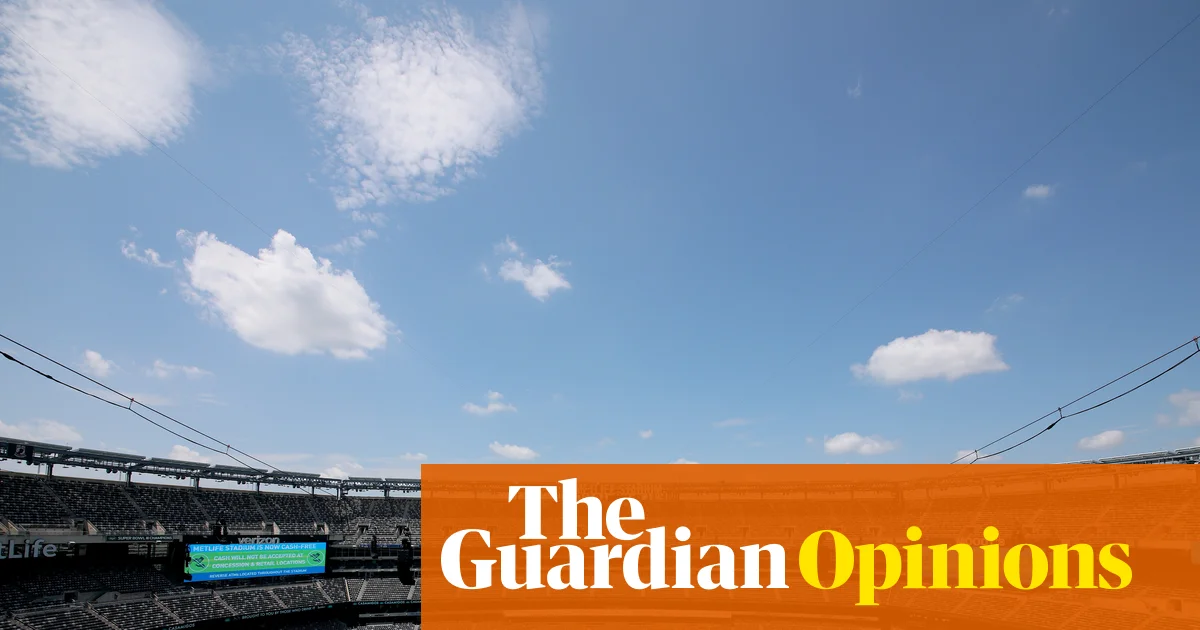
On Sunday 19 July, the final match of the 2026 Fifa World Cup will be played in East Rutherford, New Jersey. For one day, our community will be the center of the world.
But as that moment approaches, I find myself spending less time thinking about the games at MetLife Stadium, and more time worrying about whether we are ready. Because if Washington doesn’t get its act together, we risk turning a generational opportunity into an international embarrassment.
The first problem is money. Congress appropriated $625m to help the 11 American cities hosting World Cup games meet the coming crush of visitors. Each of the 104 matches will be the size of a logistical Super Bowl. State and local law enforcement will have their hands full and need every dollar.
But the money has yet to reach these cities. Roughly four months out, not one of those cities has received a dollar of it.
At a congressional hearing on 24 February, an official with the Miami World Cup host committee testified that Miami’s Fan Fest – which is expected to draw hundreds of thousands – will be canceled within 30 days if the funding does not arrive.
In Kansas City, which will host six matches and expects 650,000 visitors, the deputy police chief told us in the same hearing that delayed funds stood in the way of security planning.
In Foxborough, Massachusetts, the town has threatened to withhold the license Fifa needs to host games at Gillette Stadium because it has not received the $7.8m it has been promised. For a community of 18,600 people, that figure represents roughly half of what the entire town spends on public safety in a normal year.
These are not abstract delays. They are threats to events cities have been planning for years. The Department of Homeland Security is administering these grants through Fema and needs to release these funds. Every day of delay makes an already complex logistical challenge harder to solve.
The games also face a second threat: ICE.
As ranking member of the House homeland security taskforce overseeing World Cup security, I have been pressing this issue. At another hearing last month, I asked Todd Lyons, the director of ICE, directly: would he rule out enforcement activity at or around World Cup venues this summer?
He would not. Instead, he described ICE’s presence as a “key part” of World Cup security. He refused to rule out the use of tactical enforcement teams – the same kind deployed in Minneapolis, where federal agents recently shot and killed two American citizens.
ICE has a legitimate role in large-event security. It has worked Super Bowls and other big events without incident.
My real concern is the uncertainty. ICE and the Department of Homeland Security (DHS) arrive at this moment with a record that has alarmed communities across the country. So when an immigration enforcement agency signals it may be at our stadiums and public events, it raises legitimate fears.
Dozens of countries have issued travel advisories warning their citizens about conditions in the United States. More than 90 civil society organizations have written to Fifa expressing alarm about the chilling effect of immigration enforcement on fan attendance.
My own constituents in Paterson, New Jersey, and people across the US feel this directly. Many of them are immigrants, or the children of immigrants. Some are afraid that they could be swept up by ICE despite being in the US legally. A restaurant worker in my district told a reporter he would not attend any World Cup events, even though he is here legally. He didn’t want to give his last name. He’s not alone.
This is the consequence of the administration’s refusal to offer any assurances to the millions of people expected to visit the United States for these games. The New York-New Jersey region alone is projecting $3.3bn in economic activity from the World Cup. Fans who stay home are revenue that disappears.
None of this has to happen. DHS must release the funding it is sitting on. Congress should hold emergency hearings on ICE. The administration can offer clear assurances that visitors here legally will not be targeted by enforcement actions at games, fan fests, or watch parties. At last week’s hearing, security concerns were raised by Republicans and Democrats alike. Keeping the World Cup safe and welcoming is not a partisan issue. And while I welcome the firing of secretary Kristi Noem after her repeated failures, these problems remain.
When I visited MetLife Stadium with my colleagues, I was reminded what this moment could be. Eight World Cup matches in our district. The final. A stadium full of fans from Brazil, France, Norway, Panama, Germany and dozens of other nations, celebrating together in a district of immigrant diasporas. That is the World Cup at its best.
Fewer than 100 days from now, the 2026 Fifa World Cup comes to the US. Our taskforce will keep pushing DHS to release the funding and demanding assurances that every fan – regardless of where they’re from – will be safe. We have one chance to show the world what the best of America looks like.
-
Congresswoman Nellie Pou represents the ninth district of New Jersey and is a member of the House committee on homeland security and the top Democrat on the taskforce on enhancing security for special events in the United States, which oversees security preparations for the 2026 Fifa World Cup





Leave a Comment